

This is a “INU no SEITAI no GAKKOU(Dog Bodywork School)” for caring owners who truly think about their beloved dogs.
Both dogs and humans live under the force of gravity, which inevitably leads to muscle stiffness. To ensure your dog can “keep going for walks until the very end,” muscle care becomes essential once your beloved dog reaches the age of 12.
Reaching the age of 15 without any care and reaching 15 with ongoing care make a clear difference in the amount of usable muscle. Please start providing care now, while your dog is still able to walk.
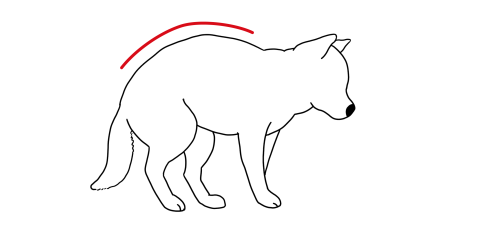
It’s possible that the muscles responsible for kicking the hind legs backward have become stiff, and that your dog is relying on the forward thrust of the front legs. Muscles that move the hind legs extend from the pelvis, and the torso and shoulder blades are strongly connected by muscles. Therefore, it is not possible to work on the back without first loosening the muscles of the limbs.

It is the muscle that pushes the hip joint backward. This muscle is used to generate propulsion with the hind legs, so it tends to be well developed in young dogs that run frequently. Most of this muscle originates from the ischium, but in senior dogs, the well-developed muscle can lose flexibility, pulling the ischium downward and causing the hips to drop or the lower back to round.
Watch Video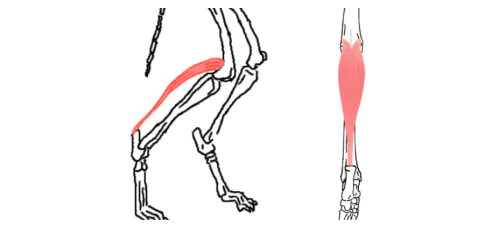
This muscle around the ankle works to push the toes backward, generating propulsion during hind leg movement. As dogs enter their senior years, muscle loss typically begins in the hind legs. Even if a dog’s hind legs are weakening and it becomes unsteady, dogs that keep trying to walk are likely relying heavily on this muscle. As long as this muscle remains functional, there’s a good chance the dog won’t give up using its hind legs, making it an important area to keep relaxed and cared for.
Watch Video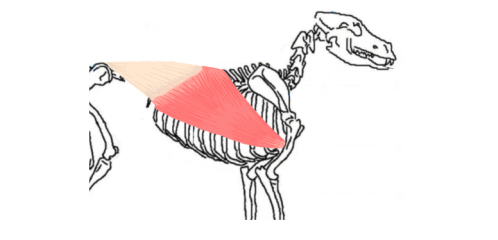
Dogs rotate their scapulae when walking, and this muscle is used to generate propulsion with the front legs.Therefore, dogs with weakening hind legs inevitably place greater load on this area. When it becomes stiff, it becomes difficult for the front legs to move forward, causing a reduction in stride length.
Watch Video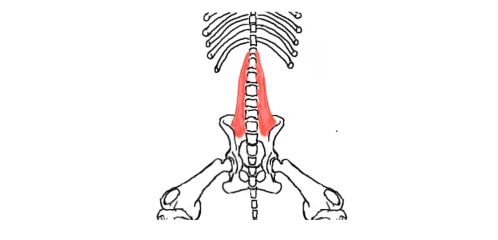
This muscle runs along the sides of the lumbar vertebrae and is active when rounding the lower back or bending it side to side. In small to medium-sized dogs, as they enter their senior years, they tend to adopt a posture where the ischium is pulled downward due to tension in the hamstrings. This area then becomes a site of secondary muscle stiffness. When the lower back is rounded, you may feel inclined to massage the back, but it’s ineffective unless you also relieve tension in the hip joints.
Watch Video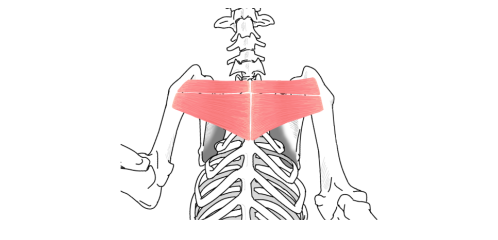
Because dogs stand with their weight shifted onto their front legs and lack a clavicle, the muscles connecting the front legs to the torso are constantly under strain, making simply standing tiring. Therefore, as dogs enter their senior years, this area can easily develop muscle stiffness just from standing.When this area becomes stiff, dogs may struggle with steps and tire more easily during walks.If you are aware of its position, this muscle can be accessed via the chest and is definitely a key area to focus on during care.
Watch Video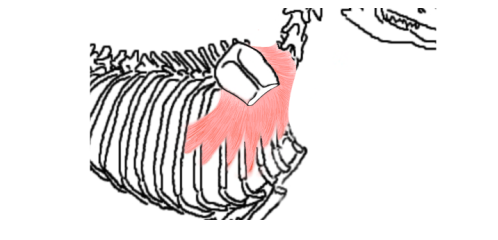
It can be said to be the most important inner muscle for dogs that bear weight primarily on their front legs. It originates from the back of the scapula and inserts onto the ribs.Since this muscle is located behind the scapula, it cannot be felt from the outside, but you can target it by stretching the scapula. In senior dogs, loss of flexibility in this muscle can limit the stride length of the front legs. If left untreated, muscle loss will begin in the hind legs. It’s important to provide care while the dog can still walk.
Watch Video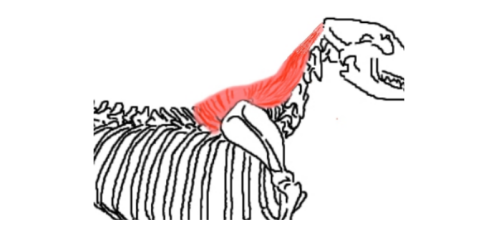
These are the muscles that connect the upper part of the shoulder blade to the head, cervical vertebrae, and thoracic vertebrae. When dogs walk, they rotate their shoulder blades, and these muscles function when pushing the front legs backward. When this area becomes stiff, it restricts the rotation of the shoulder blades, making it harder for the front legs to move forward. As a result, the stride becomes restricted, and in senior dogs, walking becomes tiring, making it difficult for them to walk long distances.
Watch Video
These muscles connect the upper part of the scapula to the thoracic vertebrae. This muscle connects the upper part of the scapula to the thoracic vertebrae. Since dogs only walk forward, their front legs tend to become stiff in a position as if they've fully pushed off backward. At that time, this muscle becomes tense, and when touched from the outside, it is perceived as tightness in the back. However, simply massaging this area directly when the back is stiff doesn’t have much effect.
Watch Video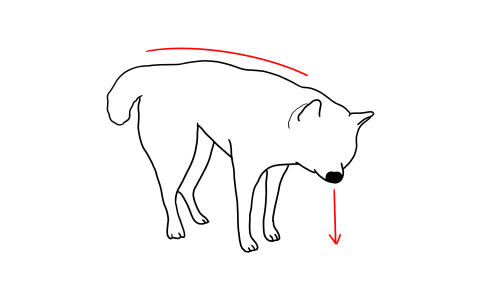
As dogs enter their senior years and their hind legs weaken, they tend to adopt a posture where the front paw pads are drawn back under the belly, reducing the distance between the front and rear paw pads. This is a posture adopted to rely more on the front legs. Because dogs have well-developed muscles connecting the shoulder blades to the skull, when their front legs are positioned further back, it becomes harder for them to lift their heads.

Dogs rotate their scapulae when they walk. This muscle is active when pulling the front leg forward. As dogs enter their senior years, muscle loss tends to begin in the hind legs, causing increased weight-bearing on the front legs. When the paw pads of the front legs are positioned further back to support this weight, the load on this area increases significantly.
Watch Video
Dogs rotate their scapulae when walking, and this muscle is used to generate propulsion with the front legs.Therefore, dogs with weakening hind legs inevitably place greater load on this area. When it becomes stiff, it becomes difficult for the front legs to move forward, causing a reduction in stride length.
Watch Video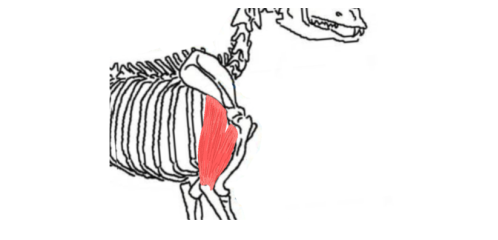
It is the muscle that supports the elbow. Dogs stand with their weight shifted forward onto their front legs, essentially holding a position similar to being midway through a push-up. Therefore, regardless of posture, as long as weight is borne on the front legs, this area is constantly under load, making it an important focus for care.
Watch Video
For dogs with a forward weight distribution, this muscle, which supports the wrist—the part of the front leg closest to the ground—is a very important area. Since this joint is at the very front in the direction of movement, it absorbs significant impact during sudden stops or landings from heights. Therefore, maintaining flexibility in this area is crucial to prevent wrist injuries.
Watch Video
These are the muscles that connect the upper part of the shoulder blade to the head, cervical vertebrae, and thoracic vertebrae. When dogs walk, they rotate their shoulder blades, and these muscles function when pushing the front legs backward. When this area becomes stiff, it restricts the rotation of the shoulder blades, making it harder for the front legs to move forward. As a result, the stride becomes restricted, and in senior dogs, walking becomes tiring, making it difficult for them to walk long distances.
Watch Video
These muscles connect the upper part of the scapula to the thoracic vertebrae. This muscle connects the upper part of the scapula to the thoracic vertebrae. Since dogs only walk forward, their front legs tend to become stiff in a position as if they've fully pushed off backward. At that time, this muscle becomes tense, and when touched from the outside, it is perceived as tightness in the back. However, simply massaging this area directly when the back is stiff doesn’t have much effect.
Watch Video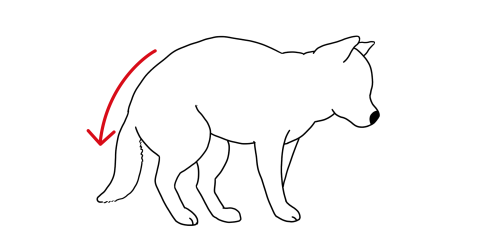
The muscles dogs use for walking originate from the ischium, but as they enter their senior years, reduced flexibility in these muscles can pull the ischium downward. When the hindquarters drop, it becomes harder for them to push off with their hind legs, causing them to rely more on their front legs—making care for the front legs equally important.
Dogs rotate their scapulae when walking, and this muscle is used to generate propulsion with the front legs.Therefore, dogs with weakening hind legs inevitably place greater load on this area. When it becomes stiff, it becomes difficult for the front legs to move forward, causing a reduction in stride length.
Watch Video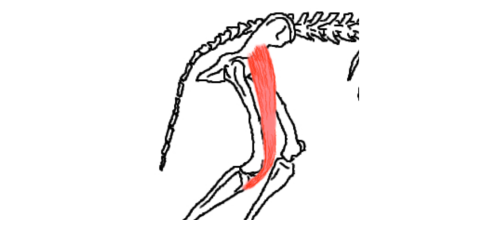
It is the muscle that pulls the hind leg forward. Because dogs only walk forward, this muscle experiences less load compared to those that push the hind legs backward. As a result, it is a muscle that is less used and more likely to weaken quickly in senior dogs.
Watch Video
It is the muscle that pushes the hip joint backward. This muscle is used to generate propulsion with the hind legs, so it tends to be well developed in young dogs that run frequently. Most of this muscle originates from the ischium, but in senior dogs, the well-developed muscle can lose flexibility, pulling the ischium downward and causing the hips to drop or the lower back to round.
Watch Video
This muscle around the ankle works to push the toes backward, generating propulsion during hind leg movement. As dogs enter their senior years, muscle loss typically begins in the hind legs. Even if a dog’s hind legs are weakening and it becomes unsteady, dogs that keep trying to walk are likely relying heavily on this muscle. As long as this muscle remains functional, there’s a good chance the dog won’t give up using its hind legs, making it an important area to keep relaxed and cared for.
Watch Video
This muscle runs along the sides of the lumbar vertebrae and is active when rounding the lower back or bending it side to side. In small to medium-sized dogs, as they enter their senior years, they tend to adopt a posture where the ischium is pulled downward due to tension in the hamstrings. This area then becomes a site of secondary muscle stiffness. When the lower back is rounded, you may feel inclined to massage the back, but it’s ineffective unless you also relieve tension in the hip joints.
Watch Video
Because dogs stand with their weight shifted onto their front legs and lack a clavicle, the muscles connecting the front legs to the torso are constantly under strain, making simply standing tiring. Therefore, as dogs enter their senior years, this area can easily develop muscle stiffness just from standing.When this area becomes stiff, dogs may struggle with steps and tire more easily during walks.If you are aware of its position, this muscle can be accessed via the chest and is definitely a key area to focus on during care.
Watch Video
It can be said to be the most important inner muscle for dogs that bear weight primarily on their front legs. It originates from the back of the scapula and inserts onto the ribs.Since this muscle is located behind the scapula, it cannot be felt from the outside, but you can target it by stretching the scapula. In senior dogs, loss of flexibility in this muscle can limit the stride length of the front legs. If left untreated, muscle loss will begin in the hind legs. It’s important to provide care while the dog can still walk.
Watch Video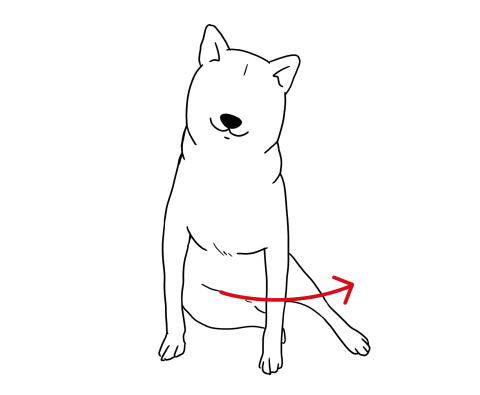
To sit in the “sit” position, a dog must take a posture where the hind legs are “neatly folded.” The knees may be fine, but the ankles and hip joints are more prone to restricted range of motion as dogs age. When reduced mobility makes it difficult or uncomfortable to fold the hind legs, dogs tend to let their “sit” posture collapse.
It is the muscle that pushes the hip joint backward. This muscle is used to generate propulsion with the hind legs, so it tends to be well developed in young dogs that run frequently. Most of this muscle originates from the ischium, but in senior dogs, the well-developed muscle can lose flexibility, pulling the ischium downward and causing the hips to drop or the lower back to round.
Watch Video
This muscle around the ankle works to push the toes backward, generating propulsion during hind leg movement. As dogs enter their senior years, muscle loss typically begins in the hind legs. Even if a dog’s hind legs are weakening and it becomes unsteady, dogs that keep trying to walk are likely relying heavily on this muscle. As long as this muscle remains functional, there’s a good chance the dog won’t give up using its hind legs, making it an important area to keep relaxed and cared for.
Watch Video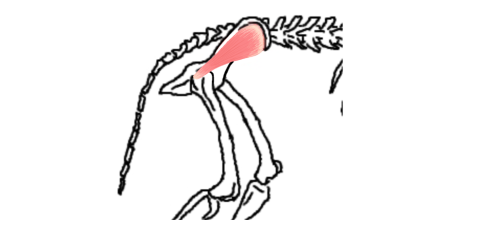
It is a muscle that works to move the hind leg outward. It functions to stabilize the hip joint during standing, preventing it from swaying side to side. And in senior dogs, this muscle tends to weaken more easily than other areas. Even if the thigh muscles remain strong, if the gluteal muscles weaken first, the dog may be able to walk once standing but have difficulty getting up on its own. Since it is very difficult to build muscle through training once a dog reaches its senior years, it’s important to maintain sufficient hip joint mobility while they are still young to help make them “less prone to decline.”
Watch Video
It is the muscle that pulls the hind leg forward. Because dogs only walk forward, this muscle experiences less load compared to those that push the hind legs backward. As a result, it is a muscle that is less used and more likely to weaken quickly in senior dogs.
Watch Video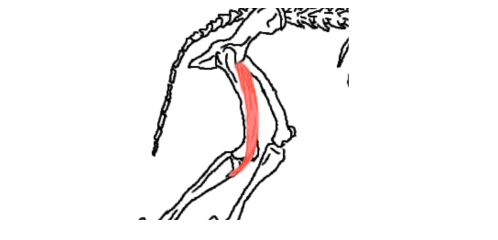
It is a muscle located in the front of the thigh. Dogs stand with their knees slightly bent, similar to a human holding a wall sit position. Put simply, dogs hold a stance that makes standing tiring. The important point is that many dogs do not properly use the vastus intermedius muscle needed to maintain this posture, and as they become seniors, this muscle is prone to weakening. Muscles reach a point where they become difficult to use before they actually begin to weaken. If care is provided at that stage, it may be possible to prevent muscle loss.
Watch Video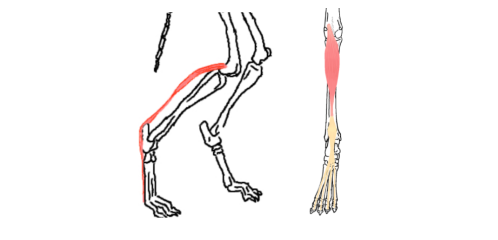
Dogs stand on their toes, with their heels raised off the ground. The muscles in the calf, including the flexor digitorum superficialis, work to maintain this angle. When jumping or wanting to lift the body, the dog bends the knee and ankle tightly and then quickly extends them to push off the ground and leap.Put simply, active dogs that run a lot or navigate stairs regularly engage both the vastus intermedius and these calf muscles.
Watch Video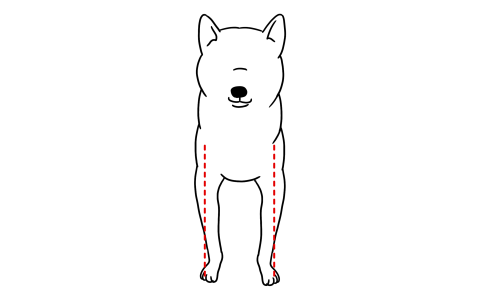
Some dogs have their elbows turned outward from a young age, while others develop this condition as they age. The important thing is that if the elbows remain turned outward, there is a high likelihood the dog will eventually have difficulty walking. It’s not an issue with the elbows themselves, but rather with the position and angle of the shoulder blades. And when it comes to the shoulder blades, muscle care can be effective.
Dogs rotate their scapulae when they walk. This muscle is active when pulling the front leg forward. As dogs enter their senior years, muscle loss tends to begin in the hind legs, causing increased weight-bearing on the front legs. When the paw pads of the front legs are positioned further back to support this weight, the load on this area increases significantly.
Watch Video
It is the muscle that supports the elbow. Dogs stand with their weight shifted forward onto their front legs, essentially holding a position similar to being midway through a push-up. Therefore, regardless of posture, as long as weight is borne on the front legs, this area is constantly under load, making it an important focus for care.
Watch Video
For dogs with a forward weight distribution, this muscle, which supports the wrist—the part of the front leg closest to the ground—is a very important area. Since this joint is at the very front in the direction of movement, it absorbs significant impact during sudden stops or landings from heights. Therefore, maintaining flexibility in this area is crucial to prevent wrist injuries.
Watch Video
Dogs rotate their scapulae when walking, and this muscle is used to generate propulsion with the front legs.Therefore, dogs with weakening hind legs inevitably place greater load on this area. When it becomes stiff, it becomes difficult for the front legs to move forward, causing a reduction in stride length.
Watch Video
Because dogs stand with their weight shifted onto their front legs and lack a clavicle, the muscles connecting the front legs to the torso are constantly under strain, making simply standing tiring. Therefore, as dogs enter their senior years, this area can easily develop muscle stiffness just from standing.When this area becomes stiff, dogs may struggle with steps and tire more easily during walks.If you are aware of its position, this muscle can be accessed via the chest and is definitely a key area to focus on during care.
Watch Video
It can be said to be the most important inner muscle for dogs that bear weight primarily on their front legs. It originates from the back of the scapula and inserts onto the ribs.Since this muscle is located behind the scapula, it cannot be felt from the outside, but you can target it by stretching the scapula. In senior dogs, loss of flexibility in this muscle can limit the stride length of the front legs. If left untreated, muscle loss will begin in the hind legs. It’s important to provide care while the dog can still walk.
Watch Video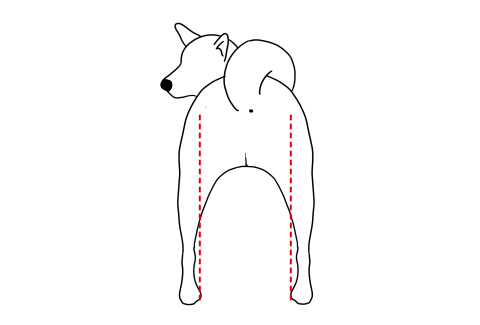
Some dogs have a slightly bow-legged stance from a young age. It can be considered a natural habit, but the important point is that a bow-legged stance leads to an uneven use of muscles compared to a normal standing posture. It may be fine when they are young, but as they reach their senior years, having muscles that are “rarely used” can lead to muscle loss starting from those areas.
It is the muscle that pushes the hip joint backward. This muscle is used to generate propulsion with the hind legs, so it tends to be well developed in young dogs that run frequently. Most of this muscle originates from the ischium, but in senior dogs, the well-developed muscle can lose flexibility, pulling the ischium downward and causing the hips to drop or the lower back to round.
Watch Video
This muscle around the ankle works to push the toes backward, generating propulsion during hind leg movement. As dogs enter their senior years, muscle loss typically begins in the hind legs. Even if a dog’s hind legs are weakening and it becomes unsteady, dogs that keep trying to walk are likely relying heavily on this muscle. As long as this muscle remains functional, there’s a good chance the dog won’t give up using its hind legs, making it an important area to keep relaxed and cared for.
Watch Video
It is a muscle that works to move the hind leg outward. It functions to stabilize the hip joint during standing, preventing it from swaying side to side. And in senior dogs, this muscle tends to weaken more easily than other areas. Even if the thigh muscles remain strong, if the gluteal muscles weaken first, the dog may be able to walk once standing but have difficulty getting up on its own. Since it is very difficult to build muscle through training once a dog reaches its senior years, it’s important to maintain sufficient hip joint mobility while they are still young to help make them “less prone to decline.”
Watch Video
This muscle runs along the sides of the lumbar vertebrae and is active when rounding the lower back or bending it side to side. In small to medium-sized dogs, as they enter their senior years, they tend to adopt a posture where the ischium is pulled downward due to tension in the hamstrings. This area then becomes a site of secondary muscle stiffness. When the lower back is rounded, you may feel inclined to massage the back, but it’s ineffective unless you also relieve tension in the hip joints.
Watch Video
It is the muscle that pulls the hind leg forward. Because dogs only walk forward, this muscle experiences less load compared to those that push the hind legs backward. As a result, it is a muscle that is less used and more likely to weaken quickly in senior dogs.
Watch Video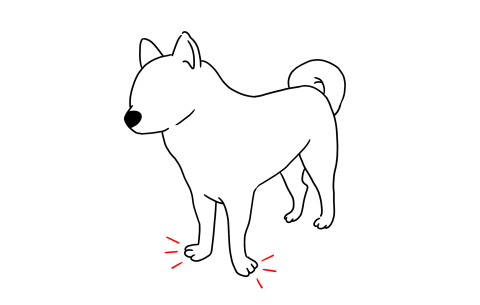
Dogs basically stand with most of their weight on their front legs. Among the joints of the front legs, the muscles that maintain the angle of the paw and wrist—the ones closest to the ground—are under constant load while the dog is standing. “In other words, the wrist is prone to deformation over time due to wear and tear. “To preserve this, it is important for senior dogs to maintain the flexibility of the muscles connecting the forelimbs to the torso.
It is the muscle that supports the elbow. Dogs stand with their weight shifted forward onto their front legs, essentially holding a position similar to being midway through a push-up. Therefore, regardless of posture, as long as weight is borne on the front legs, this area is constantly under load, making it an important focus for care.
Watch Video
For dogs with a forward weight distribution, this muscle, which supports the wrist—the part of the front leg closest to the ground—is a very important area. Since this joint is at the very front in the direction of movement, it absorbs significant impact during sudden stops or landings from heights. Therefore, maintaining flexibility in this area is crucial to prevent wrist injuries.
Watch Video
Because dogs stand with their weight shifted onto their front legs and lack a clavicle, the muscles connecting the front legs to the torso are constantly under strain, making simply standing tiring. Therefore, as dogs enter their senior years, this area can easily develop muscle stiffness just from standing.When this area becomes stiff, dogs may struggle with steps and tire more easily during walks.If you are aware of its position, this muscle can be accessed via the chest and is definitely a key area to focus on during care.
Watch Video
It can be said to be the most important inner muscle for dogs that bear weight primarily on their front legs. It originates from the back of the scapula and inserts onto the ribs.Since this muscle is located behind the scapula, it cannot be felt from the outside, but you can target it by stretching the scapula. In senior dogs, loss of flexibility in this muscle can limit the stride length of the front legs. If left untreated, muscle loss will begin in the hind legs. It’s important to provide care while the dog can still walk.
Watch Video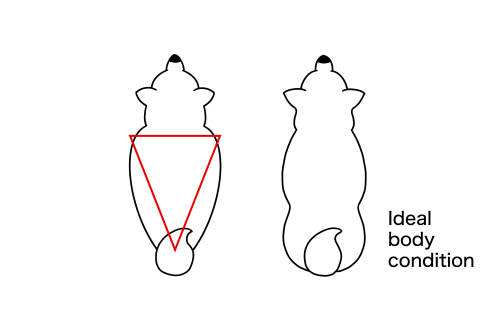
This is a characteristic seen in dogs whose hind limb strength is declining. It does **not** mean that their front legs become thicker and the body forms an inverted triangle simply because they rely on their front legs. The inverted triangle shape occurs because the **ribcage is flaring out**, not simply due to the front legs. The reason the ribcage flares is that it is **pulled by the shoulder blades**. If left unchecked, the restricted stride will accelerate muscle loss.
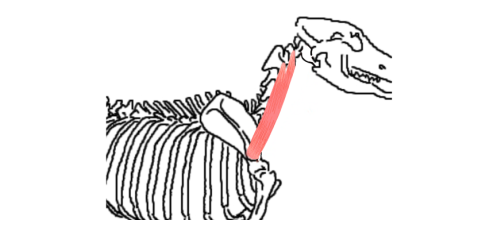
It’s a muscle that runs along both sides of the neck. This muscle works when the dog turns its head side to side, looks to the left or right, or tilts its head. Because it attaches to the shoulder blade, the dog’s neck angle and ease of movement are greatly influenced by the position, angle, and flexibility of its shoulder blades.
Watch Video
Dogs rotate their scapulae when they walk. This muscle is active when pulling the front leg forward. As dogs enter their senior years, muscle loss tends to begin in the hind legs, causing increased weight-bearing on the front legs. When the paw pads of the front legs are positioned further back to support this weight, the load on this area increases significantly.
Watch Video
It is the muscle that supports the elbow. Dogs stand with their weight shifted forward onto their front legs, essentially holding a position similar to being midway through a push-up. Therefore, regardless of posture, as long as weight is borne on the front legs, this area is constantly under load, making it an important focus for care.
Watch Video
For dogs with a forward weight distribution, this muscle, which supports the wrist—the part of the front leg closest to the ground—is a very important area. Since this joint is at the very front in the direction of movement, it absorbs significant impact during sudden stops or landings from heights. Therefore, maintaining flexibility in this area is crucial to prevent wrist injuries.
Watch Video
Because dogs stand with their weight shifted onto their front legs and lack a clavicle, the muscles connecting the front legs to the torso are constantly under strain, making simply standing tiring. Therefore, as dogs enter their senior years, this area can easily develop muscle stiffness just from standing.When this area becomes stiff, dogs may struggle with steps and tire more easily during walks.If you are aware of its position, this muscle can be accessed via the chest and is definitely a key area to focus on during care.
Watch Video
It can be said to be the most important inner muscle for dogs that bear weight primarily on their front legs. It originates from the back of the scapula and inserts onto the ribs.Since this muscle is located behind the scapula, it cannot be felt from the outside, but you can target it by stretching the scapula. In senior dogs, loss of flexibility in this muscle can limit the stride length of the front legs. If left untreated, muscle loss will begin in the hind legs. It’s important to provide care while the dog can still walk.
Watch Video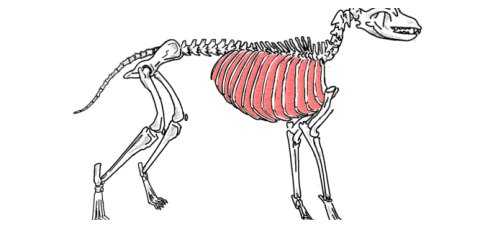
These muscles are located between the ribs, filling the spaces in between. Both dogs and humans have joint structures called costosternal joints, which allow the ribs to move. Primarily during breathing, the ribs expand during inhalation and contract during exhalation. However, dogs support their body weight on their front legs, which are not connected by bones (they lack a clavicle). Because of the muscles connecting the scapula and ribs, the ribs can become restricted in movement due to the load on the front legs, leading to a loss of trunk flexibility.
Watch Video
These are the muscles that connect the upper part of the shoulder blade to the head, cervical vertebrae, and thoracic vertebrae. When dogs walk, they rotate their shoulder blades, and these muscles function when pushing the front legs backward. When this area becomes stiff, it restricts the rotation of the shoulder blades, making it harder for the front legs to move forward. As a result, the stride becomes restricted, and in senior dogs, walking becomes tiring, making it difficult for them to walk long distances.
Watch Video
These muscles connect the upper part of the scapula to the thoracic vertebrae. This muscle connects the upper part of the scapula to the thoracic vertebrae. Since dogs only walk forward, their front legs tend to become stiff in a position as if they've fully pushed off backward. At that time, this muscle becomes tense, and when touched from the outside, it is perceived as tightness in the back. However, simply massaging this area directly when the back is stiff doesn’t have much effect.
Watch Video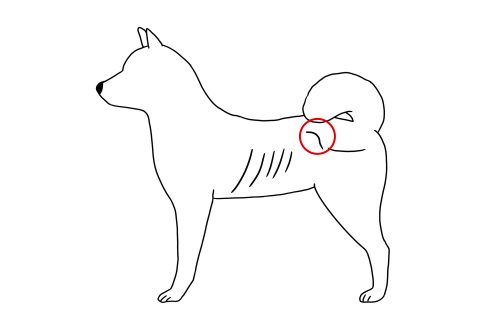
Even when a dog’s gluteal muscles are well-developed, you can check the hip bones (ilium) by feeling carefully. However, when the gluteal muscles start to weaken, the hip bones become prominent enough to be visible. The gluteal muscles support the hip joints and prevent the hips from swaying side to side. When they weaken, the dog may wobble during shifts in weight, stumble on the hind legs, or have difficulty standing up on its own.
It is the muscle that pulls the hind leg forward. Because dogs only walk forward, this muscle experiences less load compared to those that push the hind legs backward. As a result, it is a muscle that is less used and more likely to weaken quickly in senior dogs.
Watch Video
It is the muscle that pushes the hip joint backward. This muscle is used to generate propulsion with the hind legs, so it tends to be well developed in young dogs that run frequently. Most of this muscle originates from the ischium, but in senior dogs, the well-developed muscle can lose flexibility, pulling the ischium downward and causing the hips to drop or the lower back to round.
Watch Video
This muscle around the ankle works to push the toes backward, generating propulsion during hind leg movement. As dogs enter their senior years, muscle loss typically begins in the hind legs. Even if a dog’s hind legs are weakening and it becomes unsteady, dogs that keep trying to walk are likely relying heavily on this muscle. As long as this muscle remains functional, there’s a good chance the dog won’t give up using its hind legs, making it an important area to keep relaxed and cared for.
Watch Video
It is a muscle that works to move the hind leg outward. It functions to stabilize the hip joint during standing, preventing it from swaying side to side. And in senior dogs, this muscle tends to weaken more easily than other areas. Even if the thigh muscles remain strong, if the gluteal muscles weaken first, the dog may be able to walk once standing but have difficulty getting up on its own. Since it is very difficult to build muscle through training once a dog reaches its senior years, it’s important to maintain sufficient hip joint mobility while they are still young to help make them “less prone to decline.”
Watch Video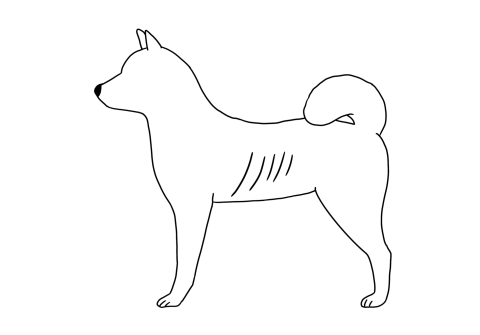
When you feel the dog’s torso from the side, the ribs have become more prominent compared to when the dog was younger. This is often interpreted as “the dog has lost weight,” but it may not simply be due to weight loss alone. Similar to the “inverted triangle from above” point, it’s possible that the ribs are spreading outward. Start care immediately to prevent loss of hind leg strength caused by restricted stride in the front legs.
It’s a muscle that runs along both sides of the neck. This muscle works when the dog turns its head side to side, looks to the left or right, or tilts its head. Because it attaches to the shoulder blade, the dog’s neck angle and ease of movement are greatly influenced by the position, angle, and flexibility of its shoulder blades.
Watch Video
Dogs rotate their scapulae when they walk. This muscle is active when pulling the front leg forward. As dogs enter their senior years, muscle loss tends to begin in the hind legs, causing increased weight-bearing on the front legs. When the paw pads of the front legs are positioned further back to support this weight, the load on this area increases significantly.
Watch Video
Dogs rotate their scapulae when walking, and this muscle is used to generate propulsion with the front legs.Therefore, dogs with weakening hind legs inevitably place greater load on this area. When it becomes stiff, it becomes difficult for the front legs to move forward, causing a reduction in stride length.
Watch Video
It is the muscle that supports the elbow. Dogs stand with their weight shifted forward onto their front legs, essentially holding a position similar to being midway through a push-up. Therefore, regardless of posture, as long as weight is borne on the front legs, this area is constantly under load, making it an important focus for care.
Watch Video
For dogs with a forward weight distribution, this muscle, which supports the wrist—the part of the front leg closest to the ground—is a very important area. Since this joint is at the very front in the direction of movement, it absorbs significant impact during sudden stops or landings from heights. Therefore, maintaining flexibility in this area is crucial to prevent wrist injuries.
Watch Video
These muscles are located between the ribs, filling the spaces in between. Both dogs and humans have joint structures called costosternal joints, which allow the ribs to move. Primarily during breathing, the ribs expand during inhalation and contract during exhalation. However, dogs support their body weight on their front legs, which are not connected by bones (they lack a clavicle). Because of the muscles connecting the scapula and ribs, the ribs can become restricted in movement due to the load on the front legs, leading to a loss of trunk flexibility.
Watch Video
Because dogs stand with their weight shifted onto their front legs and lack a clavicle, the muscles connecting the front legs to the torso are constantly under strain, making simply standing tiring. Therefore, as dogs enter their senior years, this area can easily develop muscle stiffness just from standing.When this area becomes stiff, dogs may struggle with steps and tire more easily during walks.If you are aware of its position, this muscle can be accessed via the chest and is definitely a key area to focus on during care.
Watch Video
It can be said to be the most important inner muscle for dogs that bear weight primarily on their front legs. It originates from the back of the scapula and inserts onto the ribs.Since this muscle is located behind the scapula, it cannot be felt from the outside, but you can target it by stretching the scapula. In senior dogs, loss of flexibility in this muscle can limit the stride length of the front legs. If left untreated, muscle loss will begin in the hind legs. It’s important to provide care while the dog can still walk.
Watch Video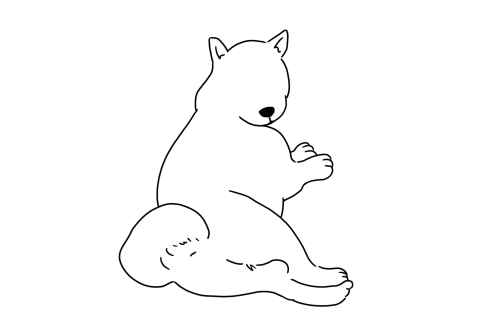
It’s not uncommon for dogs to develop a habit of always lying on the same side, either left or right. In young dogs, favoring one side is usually harmless. But as dogs get older, lying only on their right side can become a problem, potentially causing pressure sores in their senior years. This habit often starts as a muscle imbalance around the shoulder blades, so it’s a good idea to correct it early.
Dogs rotate their scapulae when they walk. This muscle is active when pulling the front leg forward. As dogs enter their senior years, muscle loss tends to begin in the hind legs, causing increased weight-bearing on the front legs. When the paw pads of the front legs are positioned further back to support this weight, the load on this area increases significantly.
Watch Video
Dogs rotate their scapulae when walking, and this muscle is used to generate propulsion with the front legs.Therefore, dogs with weakening hind legs inevitably place greater load on this area. When it becomes stiff, it becomes difficult for the front legs to move forward, causing a reduction in stride length.
Watch Video
This muscle runs along the sides of the lumbar vertebrae and is active when rounding the lower back or bending it side to side. In small to medium-sized dogs, as they enter their senior years, they tend to adopt a posture where the ischium is pulled downward due to tension in the hamstrings. This area then becomes a site of secondary muscle stiffness. When the lower back is rounded, you may feel inclined to massage the back, but it’s ineffective unless you also relieve tension in the hip joints.
Watch Video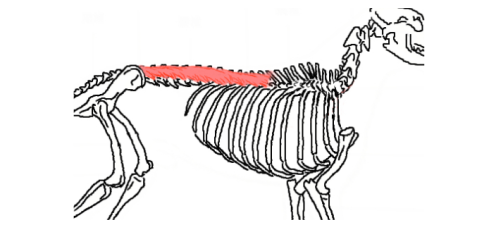
This muscle runs along the lumbar vertebrae and is active when extending or laterally flexing the lower back. It is common for senior dogs with rounded backs to have this area extremely tight, and many show discomfort or pain when it is touched. However, just because the lower back is rounded or the dog shows pain in the back, it doesn’t mean massaging the lower back alone is sufficient. The true cause of tightness in this area, leading to a rounded lower back, is likely related to issues in the limbs. This muscle is particularly important among the muscles, but unfortunately, since it is located on the backside of the scapula, it is difficult to palpate externally. However, when this muscle becomes tight, it can pull on the ribs, limiting the stride length of the forelimbs, causing asymmetry between left and right sides, and even leading to twisting habits in the torso. Therefore, it is an important area to care for.
Watch Video
These muscles are located between the ribs, filling the spaces in between. Both dogs and humans have joint structures called costosternal joints, which allow the ribs to move. Primarily during breathing, the ribs expand during inhalation and contract during exhalation. However, dogs support their body weight on their front legs, which are not connected by bones (they lack a clavicle). Because of the muscles connecting the scapula and ribs, the ribs can become restricted in movement due to the load on the front legs, leading to a loss of trunk flexibility.
Watch Video
Because dogs stand with their weight shifted onto their front legs and lack a clavicle, the muscles connecting the front legs to the torso are constantly under strain, making simply standing tiring. Therefore, as dogs enter their senior years, this area can easily develop muscle stiffness just from standing.When this area becomes stiff, dogs may struggle with steps and tire more easily during walks.If you are aware of its position, this muscle can be accessed via the chest and is definitely a key area to focus on during care.
Watch Video
It can be said to be the most important inner muscle for dogs that bear weight primarily on their front legs. It originates from the back of the scapula and inserts onto the ribs.Since this muscle is located behind the scapula, it cannot be felt from the outside, but you can target it by stretching the scapula. In senior dogs, loss of flexibility in this muscle can limit the stride length of the front legs. If left untreated, muscle loss will begin in the hind legs. It’s important to provide care while the dog can still walk.
Watch Video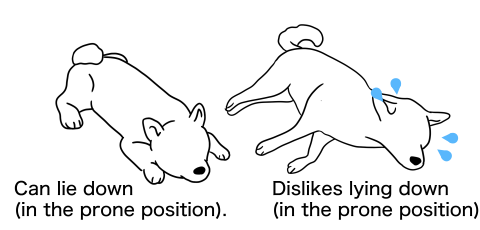
May be having difficulty moving the front legs forward. This is a sign that their stride is becoming shorter. Dogs naturally move forward, so when the front legs take longer strides, the hind legs are engaged as well, helping to maintain their strength. Simply lying down in a prone position stretches the shoulder blades, making it a valuable posture for your dog’s care.
Dogs rotate their scapulae when walking, and this muscle is used to generate propulsion with the front legs.Therefore, dogs with weakening hind legs inevitably place greater load on this area. When it becomes stiff, it becomes difficult for the front legs to move forward, causing a reduction in stride length.
Watch Video
It is the muscle that supports the elbow. Dogs stand with their weight shifted forward onto their front legs, essentially holding a position similar to being midway through a push-up. Therefore, regardless of posture, as long as weight is borne on the front legs, this area is constantly under load, making it an important focus for care.
Watch Video
For dogs with a forward weight distribution, this muscle, which supports the wrist—the part of the front leg closest to the ground—is a very important area. Since this joint is at the very front in the direction of movement, it absorbs significant impact during sudden stops or landings from heights. Therefore, maintaining flexibility in this area is crucial to prevent wrist injuries.
Watch Video
These muscles are located between the ribs, filling the spaces in between. Both dogs and humans have joint structures called costosternal joints, which allow the ribs to move. Primarily during breathing, the ribs expand during inhalation and contract during exhalation. However, dogs support their body weight on their front legs, which are not connected by bones (they lack a clavicle). Because of the muscles connecting the scapula and ribs, the ribs can become restricted in movement due to the load on the front legs, leading to a loss of trunk flexibility.
Watch Video
Because dogs stand with their weight shifted onto their front legs and lack a clavicle, the muscles connecting the front legs to the torso are constantly under strain, making simply standing tiring. Therefore, as dogs enter their senior years, this area can easily develop muscle stiffness just from standing.When this area becomes stiff, dogs may struggle with steps and tire more easily during walks.If you are aware of its position, this muscle can be accessed via the chest and is definitely a key area to focus on during care.
Watch Video
It can be said to be the most important inner muscle for dogs that bear weight primarily on their front legs. It originates from the back of the scapula and inserts onto the ribs.Since this muscle is located behind the scapula, it cannot be felt from the outside, but you can target it by stretching the scapula. In senior dogs, loss of flexibility in this muscle can limit the stride length of the front legs. If left untreated, muscle loss will begin in the hind legs. It’s important to provide care while the dog can still walk.
Watch Video
These are the muscles that connect the upper part of the shoulder blade to the head, cervical vertebrae, and thoracic vertebrae. When dogs walk, they rotate their shoulder blades, and these muscles function when pushing the front legs backward. When this area becomes stiff, it restricts the rotation of the shoulder blades, making it harder for the front legs to move forward. As a result, the stride becomes restricted, and in senior dogs, walking becomes tiring, making it difficult for them to walk long distances.
Watch Video
These muscles connect the upper part of the scapula to the thoracic vertebrae. This muscle connects the upper part of the scapula to the thoracic vertebrae. Since dogs only walk forward, their front legs tend to become stiff in a position as if they've fully pushed off backward. At that time, this muscle becomes tense, and when touched from the outside, it is perceived as tightness in the back. However, simply massaging this area directly when the back is stiff doesn’t have much effect.
Watch Video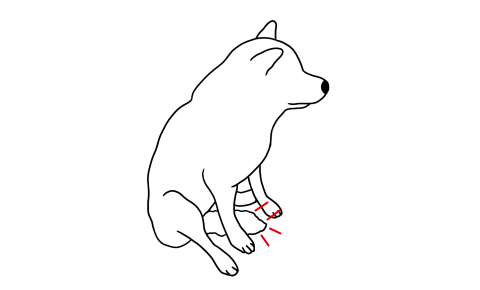
There is a high possibility that the lower back is starting to round. When sitting in this posture, the knees may press against the ribcage, causing the dog to naturally adopt a collapsed ‘sitting like a lady’ posture. A collapsed sitting posture doesn’t provide the muscle-maintaining benefits of a proper ‘squat.’ If we want the dog to retain strong hind leg muscles in the senior years, it’s important to maintain the ability to sit correctly.
It is the muscle that pushes the hip joint backward. This muscle is used to generate propulsion with the hind legs, so it tends to be well developed in young dogs that run frequently. Most of this muscle originates from the ischium, but in senior dogs, the well-developed muscle can lose flexibility, pulling the ischium downward and causing the hips to drop or the lower back to round.
Watch Video
This muscle around the ankle works to push the toes backward, generating propulsion during hind leg movement. As dogs enter their senior years, muscle loss typically begins in the hind legs. Even if a dog’s hind legs are weakening and it becomes unsteady, dogs that keep trying to walk are likely relying heavily on this muscle. As long as this muscle remains functional, there’s a good chance the dog won’t give up using its hind legs, making it an important area to keep relaxed and cared for.
Watch Video
It is the muscle that pulls the hind leg forward. Because dogs only walk forward, this muscle experiences less load compared to those that push the hind legs backward. As a result, it is a muscle that is less used and more likely to weaken quickly in senior dogs.
Watch Video
It is a muscle that works to move the hind leg outward. It functions to stabilize the hip joint during standing, preventing it from swaying side to side. And in senior dogs, this muscle tends to weaken more easily than other areas. Even if the thigh muscles remain strong, if the gluteal muscles weaken first, the dog may be able to walk once standing but have difficulty getting up on its own. Since it is very difficult to build muscle through training once a dog reaches its senior years, it’s important to maintain sufficient hip joint mobility while they are still young to help make them “less prone to decline.”
Watch Video
This muscle runs along the sides of the lumbar vertebrae and is active when rounding the lower back or bending it side to side. In small to medium-sized dogs, as they enter their senior years, they tend to adopt a posture where the ischium is pulled downward due to tension in the hamstrings. This area then becomes a site of secondary muscle stiffness. When the lower back is rounded, you may feel inclined to massage the back, but it’s ineffective unless you also relieve tension in the hip joints.
Watch Video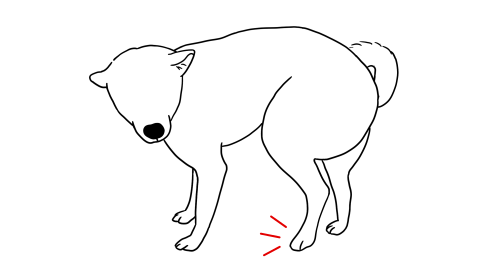
This symptom mainly occurs in the hind legs. Even if X-rays show no abnormalities in the bones, the usual approach is to monitor the condition. However, if the bones are healthy, it’s best to encourage the dog to use all its legs without lifting any excessively. Since dogs are quadrupeds, leaving them unchecked can lead to a habit of favoring one leg. It’s important to maintain a state where the dog can distribute weight evenly across all four limbs.
It is a muscle located in the front of the thigh. Dogs stand with their knees slightly bent, similar to a human holding a wall sit position. Put simply, dogs hold a stance that makes standing tiring. The important point is that many dogs do not properly use the vastus intermedius muscle needed to maintain this posture, and as they become seniors, this muscle is prone to weakening. Muscles reach a point where they become difficult to use before they actually begin to weaken. If care is provided at that stage, it may be possible to prevent muscle loss.
Watch Video
Dogs stand on their toes, with their heels raised off the ground. The muscles in the calf, including the flexor digitorum superficialis, work to maintain this angle. When jumping or wanting to lift the body, the dog bends the knee and ankle tightly and then quickly extends them to push off the ground and leap.Put simply, active dogs that run a lot or navigate stairs regularly engage both the vastus intermedius and these calf muscles.
Watch Video
It is a muscle that works to move the hind leg outward. It functions to stabilize the hip joint during standing, preventing it from swaying side to side. And in senior dogs, this muscle tends to weaken more easily than other areas. Even if the thigh muscles remain strong, if the gluteal muscles weaken first, the dog may be able to walk once standing but have difficulty getting up on its own. Since it is very difficult to build muscle through training once a dog reaches its senior years, it’s important to maintain sufficient hip joint mobility while they are still young to help make them “less prone to decline.”
Watch Video
Because dogs stand with their weight shifted onto their front legs and lack a clavicle, the muscles connecting the front legs to the torso are constantly under strain, making simply standing tiring. Therefore, as dogs enter their senior years, this area can easily develop muscle stiffness just from standing.When this area becomes stiff, dogs may struggle with steps and tire more easily during walks.If you are aware of its position, this muscle can be accessed via the chest and is definitely a key area to focus on during care.
Watch Video
It can be said to be the most important inner muscle for dogs that bear weight primarily on their front legs. It originates from the back of the scapula and inserts onto the ribs.Since this muscle is located behind the scapula, it cannot be felt from the outside, but you can target it by stretching the scapula. In senior dogs, loss of flexibility in this muscle can limit the stride length of the front legs. If left untreated, muscle loss will begin in the hind legs. It’s important to provide care while the dog can still walk.
Watch Video
Dogs rotate their scapulae when they walk. This muscle is active when pulling the front leg forward. As dogs enter their senior years, muscle loss tends to begin in the hind legs, causing increased weight-bearing on the front legs. When the paw pads of the front legs are positioned further back to support this weight, the load on this area increases significantly.
Watch Video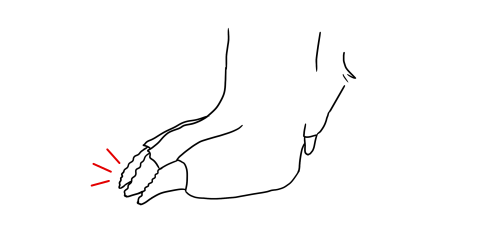
This symptom also tends to occur mostly in the hind legs. It occurs when the hind leg, after pushing off, scrapes against the ground as it is brought forward. The cause can be either a weakening of the muscles that bring the hind leg forward or a reduced ability to bend the knee and ankle. While this can lead to abrasions, it is also a sign that muscle weakness or joint mobility restrictions are beginning, and care should be started at this early stage.
It is a muscle located in the front of the thigh. Dogs stand with their knees slightly bent, similar to a human holding a wall sit position. Put simply, dogs hold a stance that makes standing tiring. The important point is that many dogs do not properly use the vastus intermedius muscle needed to maintain this posture, and as they become seniors, this muscle is prone to weakening. Muscles reach a point where they become difficult to use before they actually begin to weaken. If care is provided at that stage, it may be possible to prevent muscle loss.
Watch Video
Dogs stand on their toes, with their heels raised off the ground. The muscles in the calf, including the flexor digitorum superficialis, work to maintain this angle. When jumping or wanting to lift the body, the dog bends the knee and ankle tightly and then quickly extends them to push off the ground and leap.Put simply, active dogs that run a lot or navigate stairs regularly engage both the vastus intermedius and these calf muscles.
Watch Video
It is the muscle that pulls the hind leg forward. Because dogs only walk forward, this muscle experiences less load compared to those that push the hind legs backward. As a result, it is a muscle that is less used and more likely to weaken quickly in senior dogs.
Watch Video
It is the muscle that pushes the hip joint backward. This muscle is used to generate propulsion with the hind legs, so it tends to be well developed in young dogs that run frequently. Most of this muscle originates from the ischium, but in senior dogs, the well-developed muscle can lose flexibility, pulling the ischium downward and causing the hips to drop or the lower back to round.
Watch Video
This muscle around the ankle works to push the toes backward, generating propulsion during hind leg movement. As dogs enter their senior years, muscle loss typically begins in the hind legs. Even if a dog’s hind legs are weakening and it becomes unsteady, dogs that keep trying to walk are likely relying heavily on this muscle. As long as this muscle remains functional, there’s a good chance the dog won’t give up using its hind legs, making it an important area to keep relaxed and cared for.
Watch Video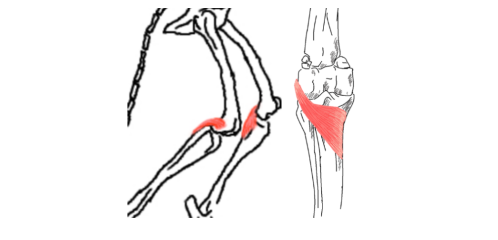
This muscle is located on the front lower part of the leg, just below the knee—essentially the shin—and it works when lifting the toes. Like the popliteus muscle, it helps lift the toes off the ground when the hind leg is brought forward to prevent dragging. During this movement, no weight is placed on the hind limb. Therefore, like the popliteus muscle, the tibialis anterior muscle generally does not bear significant load.
Watch Video
This muscle runs along the sides of the lumbar vertebrae and is active when rounding the lower back or bending it side to side. In small to medium-sized dogs, as they enter their senior years, they tend to adopt a posture where the ischium is pulled downward due to tension in the hamstrings. This area then becomes a site of secondary muscle stiffness. When the lower back is rounded, you may feel inclined to massage the back, but it’s ineffective unless you also relieve tension in the hip joints.
Watch Video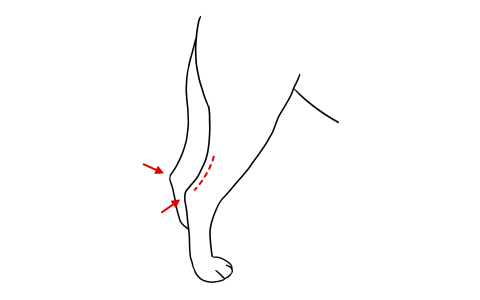
Unlike humans, dogs stand on their toes, with their heels off the ground. This is similar to being on tiptoe in humans. When standing on tiptoe, the calves have to constantly contract and work hard. If this continues, the calves can become stiff and lose flexibility. Loss of flexibility is the beginning of muscle weakness, so it’s important to start care early.
It is the muscle that pushes the hip joint backward. This muscle is used to generate propulsion with the hind legs, so it tends to be well developed in young dogs that run frequently. Most of this muscle originates from the ischium, but in senior dogs, the well-developed muscle can lose flexibility, pulling the ischium downward and causing the hips to drop or the lower back to round.
Watch Video
This muscle around the ankle works to push the toes backward, generating propulsion during hind leg movement. As dogs enter their senior years, muscle loss typically begins in the hind legs. Even if a dog’s hind legs are weakening and it becomes unsteady, dogs that keep trying to walk are likely relying heavily on this muscle. As long as this muscle remains functional, there’s a good chance the dog won’t give up using its hind legs, making it an important area to keep relaxed and cared for.
Watch Video
It is a muscle located in the front of the thigh. Dogs stand with their knees slightly bent, similar to a human holding a wall sit position. Put simply, dogs hold a stance that makes standing tiring. The important point is that many dogs do not properly use the vastus intermedius muscle needed to maintain this posture, and as they become seniors, this muscle is prone to weakening. Muscles reach a point where they become difficult to use before they actually begin to weaken. If care is provided at that stage, it may be possible to prevent muscle loss.
Watch Video
Dogs stand on their toes, with their heels raised off the ground. The muscles in the calf, including the flexor digitorum superficialis, work to maintain this angle. When jumping or wanting to lift the body, the dog bends the knee and ankle tightly and then quickly extends them to push off the ground and leap.Put simply, active dogs that run a lot or navigate stairs regularly engage both the vastus intermedius and these calf muscles.
Watch Video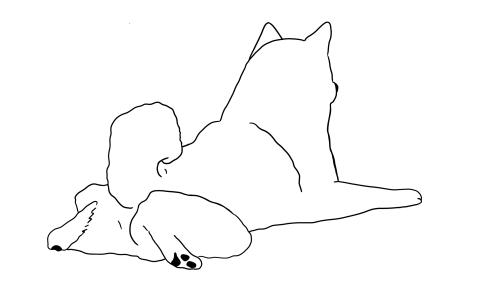
The dog may be having difficulty spreading its hips and opening its chest. While standing, the dog has to keep its front and back legs spread and firmly grounded to maintain balance. As a result, many senior dogs have difficulty spreading their legs. For dogs in the advanced senior stage, keeping all four limbs flexible is crucial for independent walking.
Dogs rotate their scapulae when they walk. This muscle is active when pulling the front leg forward. As dogs enter their senior years, muscle loss tends to begin in the hind legs, causing increased weight-bearing on the front legs. When the paw pads of the front legs are positioned further back to support this weight, the load on this area increases significantly.
Watch Video
It is the muscle that supports the elbow. Dogs stand with their weight shifted forward onto their front legs, essentially holding a position similar to being midway through a push-up. Therefore, regardless of posture, as long as weight is borne on the front legs, this area is constantly under load, making it an important focus for care.
Watch Video
For dogs with a forward weight distribution, this muscle, which supports the wrist—the part of the front leg closest to the ground—is a very important area. Since this joint is at the very front in the direction of movement, it absorbs significant impact during sudden stops or landings from heights. Therefore, maintaining flexibility in this area is crucial to prevent wrist injuries.
Watch Video
Because dogs stand with their weight shifted onto their front legs and lack a clavicle, the muscles connecting the front legs to the torso are constantly under strain, making simply standing tiring. Therefore, as dogs enter their senior years, this area can easily develop muscle stiffness just from standing.When this area becomes stiff, dogs may struggle with steps and tire more easily during walks.If you are aware of its position, this muscle can be accessed via the chest and is definitely a key area to focus on during care.
Watch Video
It can be said to be the most important inner muscle for dogs that bear weight primarily on their front legs. It originates from the back of the scapula and inserts onto the ribs.Since this muscle is located behind the scapula, it cannot be felt from the outside, but you can target it by stretching the scapula. In senior dogs, loss of flexibility in this muscle can limit the stride length of the front legs. If left untreated, muscle loss will begin in the hind legs. It’s important to provide care while the dog can still walk.
Watch Video
It is the muscle that pushes the hip joint backward. This muscle is used to generate propulsion with the hind legs, so it tends to be well developed in young dogs that run frequently. Most of this muscle originates from the ischium, but in senior dogs, the well-developed muscle can lose flexibility, pulling the ischium downward and causing the hips to drop or the lower back to round.
Watch Video
This muscle around the ankle works to push the toes backward, generating propulsion during hind leg movement. As dogs enter their senior years, muscle loss typically begins in the hind legs. Even if a dog’s hind legs are weakening and it becomes unsteady, dogs that keep trying to walk are likely relying heavily on this muscle. As long as this muscle remains functional, there’s a good chance the dog won’t give up using its hind legs, making it an important area to keep relaxed and cared for.
Watch Video
This muscle runs along the sides of the lumbar vertebrae and is active when rounding the lower back or bending it side to side. In small to medium-sized dogs, as they enter their senior years, they tend to adopt a posture where the ischium is pulled downward due to tension in the hamstrings. This area then becomes a site of secondary muscle stiffness. When the lower back is rounded, you may feel inclined to massage the back, but it’s ineffective unless you also relieve tension in the hip joints.
Watch Video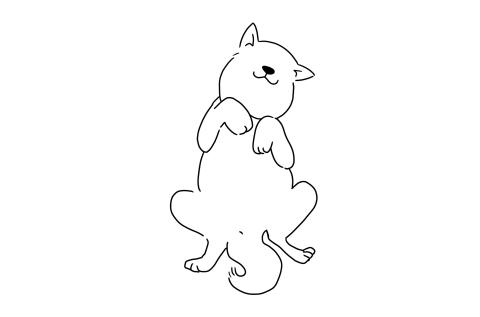
There is a high possibility that the dog’s spinal flexibility has decreased. In dogs, the flexibility of the back is largely influenced by stiffness in the shoulder blades. Dogs are front-weighted and lack collarbones, so all the weight on their front legs is supported by the muscles around the shoulder blades. As a result, stiffness in the shoulder blades inevitably occurs in all dogs. Make sure to take care of it as soon as you notice it.
This muscle runs along the sides of the lumbar vertebrae and is active when rounding the lower back or bending it side to side. In small to medium-sized dogs, as they enter their senior years, they tend to adopt a posture where the ischium is pulled downward due to tension in the hamstrings. This area then becomes a site of secondary muscle stiffness. When the lower back is rounded, you may feel inclined to massage the back, but it’s ineffective unless you also relieve tension in the hip joints.
Watch Video
This muscle runs along the lumbar vertebrae and is active when extending or laterally flexing the lower back. It is common for senior dogs with rounded backs to have this area extremely tight, and many show discomfort or pain when it is touched. However, just because the lower back is rounded or the dog shows pain in the back, it doesn’t mean massaging the lower back alone is sufficient. The true cause of tightness in this area, leading to a rounded lower back, is likely related to issues in the limbs. This muscle is particularly important among the muscles, but unfortunately, since it is located on the backside of the scapula, it is difficult to palpate externally. However, when this muscle becomes tight, it can pull on the ribs, limiting the stride length of the forelimbs, causing asymmetry between left and right sides, and even leading to twisting habits in the torso. Therefore, it is an important area to care for.
Watch Video
These muscles are located between the ribs, filling the spaces in between. Both dogs and humans have joint structures called costosternal joints, which allow the ribs to move. Primarily during breathing, the ribs expand during inhalation and contract during exhalation. However, dogs support their body weight on their front legs, which are not connected by bones (they lack a clavicle). Because of the muscles connecting the scapula and ribs, the ribs can become restricted in movement due to the load on the front legs, leading to a loss of trunk flexibility.
Watch Video
Because dogs stand with their weight shifted onto their front legs and lack a clavicle, the muscles connecting the front legs to the torso are constantly under strain, making simply standing tiring. Therefore, as dogs enter their senior years, this area can easily develop muscle stiffness just from standing.When this area becomes stiff, dogs may struggle with steps and tire more easily during walks.If you are aware of its position, this muscle can be accessed via the chest and is definitely a key area to focus on during care.
Watch Video
It can be said to be the most important inner muscle for dogs that bear weight primarily on their front legs. It originates from the back of the scapula and inserts onto the ribs.Since this muscle is located behind the scapula, it cannot be felt from the outside, but you can target it by stretching the scapula. In senior dogs, loss of flexibility in this muscle can limit the stride length of the front legs. If left untreated, muscle loss will begin in the hind legs. It’s important to provide care while the dog can still walk.
Watch Video
Dogs rotate their scapulae when they walk. This muscle is active when pulling the front leg forward. As dogs enter their senior years, muscle loss tends to begin in the hind legs, causing increased weight-bearing on the front legs. When the paw pads of the front legs are positioned further back to support this weight, the load on this area increases significantly.
Watch Video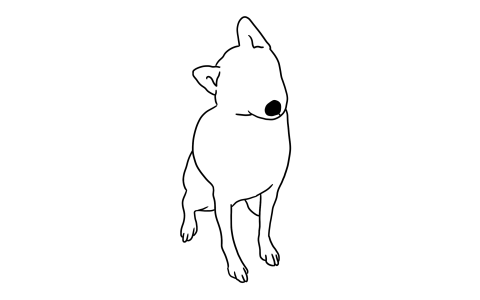
Unlike humans, whose cervical vertebrae are stacked vertically, a dog’s cervical vertebrae are angled. Naturally, supporting an angled cervical spine places a greater load on the muscles. For this reason, the muscles that support a dog’s cervical vertebrae are highly developed, but the muscles responsible for moving the neck side to side are attached to the shoulder blades. In other words, the position and angle of the shoulder blades can cause the neck to tilt.
It’s a muscle that runs along both sides of the neck. This muscle works when the dog turns its head side to side, looks to the left or right, or tilts its head. Because it attaches to the shoulder blade, the dog’s neck angle and ease of movement are greatly influenced by the position, angle, and flexibility of its shoulder blades.
Watch Video
Dogs rotate their scapulae when walking, and this muscle is used to generate propulsion with the front legs.Therefore, dogs with weakening hind legs inevitably place greater load on this area. When it becomes stiff, it becomes difficult for the front legs to move forward, causing a reduction in stride length.
Watch Video
Dogs rotate their scapulae when they walk. This muscle is active when pulling the front leg forward. As dogs enter their senior years, muscle loss tends to begin in the hind legs, causing increased weight-bearing on the front legs. When the paw pads of the front legs are positioned further back to support this weight, the load on this area increases significantly.
Watch Video
Because dogs stand with their weight shifted onto their front legs and lack a clavicle, the muscles connecting the front legs to the torso are constantly under strain, making simply standing tiring. Therefore, as dogs enter their senior years, this area can easily develop muscle stiffness just from standing.When this area becomes stiff, dogs may struggle with steps and tire more easily during walks.If you are aware of its position, this muscle can be accessed via the chest and is definitely a key area to focus on during care.
Watch Video
It can be said to be the most important inner muscle for dogs that bear weight primarily on their front legs. It originates from the back of the scapula and inserts onto the ribs.Since this muscle is located behind the scapula, it cannot be felt from the outside, but you can target it by stretching the scapula. In senior dogs, loss of flexibility in this muscle can limit the stride length of the front legs. If left untreated, muscle loss will begin in the hind legs. It’s important to provide care while the dog can still walk.
Watch Video
These are the muscles that connect the upper part of the shoulder blade to the head, cervical vertebrae, and thoracic vertebrae. When dogs walk, they rotate their shoulder blades, and these muscles function when pushing the front legs backward. When this area becomes stiff, it restricts the rotation of the shoulder blades, making it harder for the front legs to move forward. As a result, the stride becomes restricted, and in senior dogs, walking becomes tiring, making it difficult for them to walk long distances.
Watch Video
These muscles connect the upper part of the scapula to the thoracic vertebrae. This muscle connects the upper part of the scapula to the thoracic vertebrae. Since dogs only walk forward, their front legs tend to become stiff in a position as if they've fully pushed off backward. At that time, this muscle becomes tense, and when touched from the outside, it is perceived as tightness in the back. However, simply massaging this area directly when the back is stiff doesn’t have much effect.
Watch Video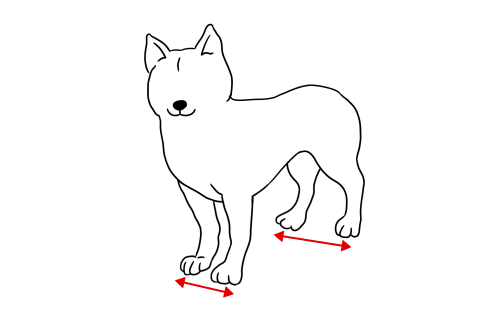
It is no longer in a posture where the joints are aligned straight: for the front legs, shoulder, elbow, and wrist; for the hind legs, hip, knee, and ankle. Alternatively, it may be in a state where the limbs cannot swing straight forward and backward—in other words, when viewed from behind, they may appear rotated outward. This is not the natural way for the limbs to move, so if it continues, the muscles that should normally be used during walking may not be engaged, leading to a high risk of muscle atrophy.
It is the muscle that pushes the hip joint backward. This muscle is used to generate propulsion with the hind legs, so it tends to be well developed in young dogs that run frequently. Most of this muscle originates from the ischium, but in senior dogs, the well-developed muscle can lose flexibility, pulling the ischium downward and causing the hips to drop or the lower back to round.
Watch Video
This muscle around the ankle works to push the toes backward, generating propulsion during hind leg movement. As dogs enter their senior years, muscle loss typically begins in the hind legs. Even if a dog’s hind legs are weakening and it becomes unsteady, dogs that keep trying to walk are likely relying heavily on this muscle. As long as this muscle remains functional, there’s a good chance the dog won’t give up using its hind legs, making it an important area to keep relaxed and cared for.
Watch Video
This muscle runs along the sides of the lumbar vertebrae and is active when rounding the lower back or bending it side to side. In small to medium-sized dogs, as they enter their senior years, they tend to adopt a posture where the ischium is pulled downward due to tension in the hamstrings. This area then becomes a site of secondary muscle stiffness. When the lower back is rounded, you may feel inclined to massage the back, but it’s ineffective unless you also relieve tension in the hip joints.
Watch Video
Dogs rotate their scapulae when they walk. This muscle is active when pulling the front leg forward. As dogs enter their senior years, muscle loss tends to begin in the hind legs, causing increased weight-bearing on the front legs. When the paw pads of the front legs are positioned further back to support this weight, the load on this area increases significantly.
Watch Video
Dogs rotate their scapulae when walking, and this muscle is used to generate propulsion with the front legs.Therefore, dogs with weakening hind legs inevitably place greater load on this area. When it becomes stiff, it becomes difficult for the front legs to move forward, causing a reduction in stride length.
Watch Video
Because dogs stand with their weight shifted onto their front legs and lack a clavicle, the muscles connecting the front legs to the torso are constantly under strain, making simply standing tiring. Therefore, as dogs enter their senior years, this area can easily develop muscle stiffness just from standing.When this area becomes stiff, dogs may struggle with steps and tire more easily during walks.If you are aware of its position, this muscle can be accessed via the chest and is definitely a key area to focus on during care.
Watch Video
It can be said to be the most important inner muscle for dogs that bear weight primarily on their front legs. It originates from the back of the scapula and inserts onto the ribs.Since this muscle is located behind the scapula, it cannot be felt from the outside, but you can target it by stretching the scapula. In senior dogs, loss of flexibility in this muscle can limit the stride length of the front legs. If left untreated, muscle loss will begin in the hind legs. It’s important to provide care while the dog can still walk.
Watch Video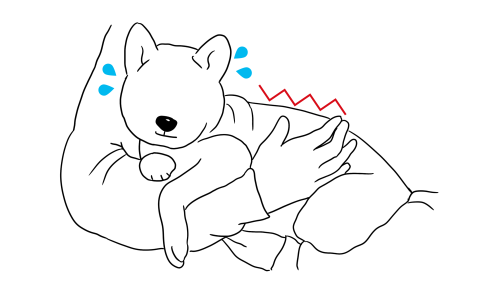
There’s a high possibility that your dog’s ribs have become stiff. Both dogs and humans have a ribcage structure that allows the ribs to move. Although the ribs mainly move during breathing, in dogs—because they lack a clavicle and bear weight on their front legs—the inner muscles connecting the shoulder blade to the ribs are under constant load even when simply standing. If a dog lives for more than ten years, those inner muscles can become stiff just from “standing normally,” since they are constantly supporting the body with the front legs. When that stiffness becomes pronounced, touching the dog’s torso can cause pain.
These muscles are located between the ribs, filling the spaces in between. Both dogs and humans have joint structures called costosternal joints, which allow the ribs to move. Primarily during breathing, the ribs expand during inhalation and contract during exhalation. However, dogs support their body weight on their front legs, which are not connected by bones (they lack a clavicle). Because of the muscles connecting the scapula and ribs, the ribs can become restricted in movement due to the load on the front legs, leading to a loss of trunk flexibility.
Watch Video
Because dogs stand with their weight shifted onto their front legs and lack a clavicle, the muscles connecting the front legs to the torso are constantly under strain, making simply standing tiring. Therefore, as dogs enter their senior years, this area can easily develop muscle stiffness just from standing.When this area becomes stiff, dogs may struggle with steps and tire more easily during walks.If you are aware of its position, this muscle can be accessed via the chest and is definitely a key area to focus on during care.
Watch Video
It can be said to be the most important inner muscle for dogs that bear weight primarily on their front legs. It originates from the back of the scapula and inserts onto the ribs.Since this muscle is located behind the scapula, it cannot be felt from the outside, but you can target it by stretching the scapula. In senior dogs, loss of flexibility in this muscle can limit the stride length of the front legs. If left untreated, muscle loss will begin in the hind legs. It’s important to provide care while the dog can still walk.
Watch Video
These are the muscles that connect the upper part of the shoulder blade to the head, cervical vertebrae, and thoracic vertebrae. When dogs walk, they rotate their shoulder blades, and these muscles function when pushing the front legs backward. When this area becomes stiff, it restricts the rotation of the shoulder blades, making it harder for the front legs to move forward. As a result, the stride becomes restricted, and in senior dogs, walking becomes tiring, making it difficult for them to walk long distances.
Watch Video
These muscles connect the upper part of the scapula to the thoracic vertebrae. This muscle connects the upper part of the scapula to the thoracic vertebrae. Since dogs only walk forward, their front legs tend to become stiff in a position as if they've fully pushed off backward. At that time, this muscle becomes tense, and when touched from the outside, it is perceived as tightness in the back. However, simply massaging this area directly when the back is stiff doesn’t have much effect.
Watch Video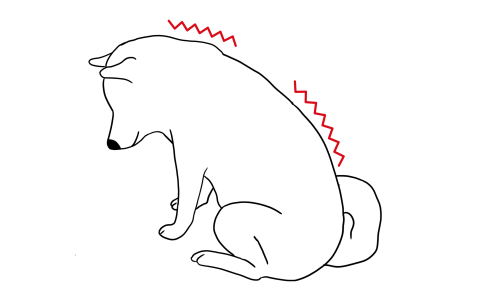
There is a possibility that the shoulder blades have slid forward. Hearing that may sound alarming to some, but since dogs don’t have a collarbone, their shoulder blades can easily change position and angle. In other words, when it comes to the shoulder blades, “muscle care is actually very beneficial.” If your dog resists being picked up or wearing a harness, it can start to interfere with their daily life. I strongly recommend giving your dog care to help reduce daily stress.
These muscles are located between the ribs, filling the spaces in between. Both dogs and humans have joint structures called costosternal joints, which allow the ribs to move. Primarily during breathing, the ribs expand during inhalation and contract during exhalation. However, dogs support their body weight on their front legs, which are not connected by bones (they lack a clavicle). Because of the muscles connecting the scapula and ribs, the ribs can become restricted in movement due to the load on the front legs, leading to a loss of trunk flexibility.
Watch Video
Because dogs stand with their weight shifted onto their front legs and lack a clavicle, the muscles connecting the front legs to the torso are constantly under strain, making simply standing tiring. Therefore, as dogs enter their senior years, this area can easily develop muscle stiffness just from standing.When this area becomes stiff, dogs may struggle with steps and tire more easily during walks.If you are aware of its position, this muscle can be accessed via the chest and is definitely a key area to focus on during care.
Watch Video
It can be said to be the most important inner muscle for dogs that bear weight primarily on their front legs. It originates from the back of the scapula and inserts onto the ribs.Since this muscle is located behind the scapula, it cannot be felt from the outside, but you can target it by stretching the scapula. In senior dogs, loss of flexibility in this muscle can limit the stride length of the front legs. If left untreated, muscle loss will begin in the hind legs. It’s important to provide care while the dog can still walk.
Watch Video
These are the muscles that connect the upper part of the shoulder blade to the head, cervical vertebrae, and thoracic vertebrae. When dogs walk, they rotate their shoulder blades, and these muscles function when pushing the front legs backward. When this area becomes stiff, it restricts the rotation of the shoulder blades, making it harder for the front legs to move forward. As a result, the stride becomes restricted, and in senior dogs, walking becomes tiring, making it difficult for them to walk long distances.
Watch Video
These muscles connect the upper part of the scapula to the thoracic vertebrae. This muscle connects the upper part of the scapula to the thoracic vertebrae. Since dogs only walk forward, their front legs tend to become stiff in a position as if they've fully pushed off backward. At that time, this muscle becomes tense, and when touched from the outside, it is perceived as tightness in the back. However, simply massaging this area directly when the back is stiff doesn’t have much effect.
Watch Video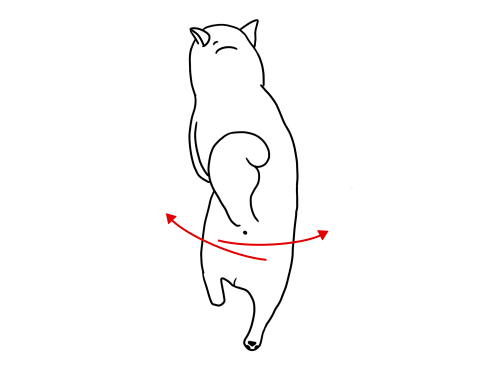
“This swaying walk—often compared to a ‘Monroe walk’—is not limited to large breeds. It is commonly seen in Shiba Inus, Corgis, Chihuahuas, and many others. If you notice your dog’s hips swaying now—even if they were fine when younger—it’s important to start care right away. This movement means the dog is relying on its hips when it should be using the muscles of the hind legs, which can lead to faster weakening of the hind leg muscles.”
It is the muscle that pulls the hind leg forward. Because dogs only walk forward, this muscle experiences less load compared to those that push the hind legs backward. As a result, it is a muscle that is less used and more likely to weaken quickly in senior dogs.
Watch Video
It is the muscle that pushes the hip joint backward. This muscle is used to generate propulsion with the hind legs, so it tends to be well developed in young dogs that run frequently. Most of this muscle originates from the ischium, but in senior dogs, the well-developed muscle can lose flexibility, pulling the ischium downward and causing the hips to drop or the lower back to round.
Watch Video
This muscle around the ankle works to push the toes backward, generating propulsion during hind leg movement. As dogs enter their senior years, muscle loss typically begins in the hind legs. Even if a dog’s hind legs are weakening and it becomes unsteady, dogs that keep trying to walk are likely relying heavily on this muscle. As long as this muscle remains functional, there’s a good chance the dog won’t give up using its hind legs, making it an important area to keep relaxed and cared for.
Watch Video
It is a muscle that works to move the hind leg outward. It functions to stabilize the hip joint during standing, preventing it from swaying side to side. And in senior dogs, this muscle tends to weaken more easily than other areas. Even if the thigh muscles remain strong, if the gluteal muscles weaken first, the dog may be able to walk once standing but have difficulty getting up on its own. Since it is very difficult to build muscle through training once a dog reaches its senior years, it’s important to maintain sufficient hip joint mobility while they are still young to help make them “less prone to decline.”
Watch Video
This muscle is located on the front lower part of the leg, just below the knee—essentially the shin—and it works when lifting the toes. Like the popliteus muscle, it helps lift the toes off the ground when the hind leg is brought forward to prevent dragging. During this movement, no weight is placed on the hind limb. Therefore, like the popliteus muscle, the tibialis anterior muscle generally does not bear significant load.
Watch Video
This muscle runs along the sides of the lumbar vertebrae and is active when rounding the lower back or bending it side to side. In small to medium-sized dogs, as they enter their senior years, they tend to adopt a posture where the ischium is pulled downward due to tension in the hamstrings. This area then becomes a site of secondary muscle stiffness. When the lower back is rounded, you may feel inclined to massage the back, but it’s ineffective unless you also relieve tension in the hip joints.
Watch Video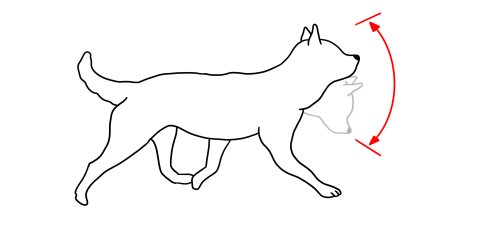
“When a dog walks, the movement of the front legs comes from the rotation of the shoulder blades. If the muscles that move the shoulder blades become stiff, the dog will need to move its upper body together in order to move the front legs. Because the shoulder blades are firmly connected to the skull, this shows up in the gait as the head moving up and down.”
It’s a muscle that runs along both sides of the neck. This muscle works when the dog turns its head side to side, looks to the left or right, or tilts its head. Because it attaches to the shoulder blade, the dog’s neck angle and ease of movement are greatly influenced by the position, angle, and flexibility of its shoulder blades.
Watch Video
Dogs rotate their scapulae when they walk. This muscle is active when pulling the front leg forward. As dogs enter their senior years, muscle loss tends to begin in the hind legs, causing increased weight-bearing on the front legs. When the paw pads of the front legs are positioned further back to support this weight, the load on this area increases significantly.
Watch Video
Dogs rotate their scapulae when walking, and this muscle is used to generate propulsion with the front legs.Therefore, dogs with weakening hind legs inevitably place greater load on this area. When it becomes stiff, it becomes difficult for the front legs to move forward, causing a reduction in stride length.
Watch Video
These muscles are located between the ribs, filling the spaces in between. Both dogs and humans have joint structures called costosternal joints, which allow the ribs to move. Primarily during breathing, the ribs expand during inhalation and contract during exhalation. However, dogs support their body weight on their front legs, which are not connected by bones (they lack a clavicle). Because of the muscles connecting the scapula and ribs, the ribs can become restricted in movement due to the load on the front legs, leading to a loss of trunk flexibility.
Watch Video
Because dogs stand with their weight shifted onto their front legs and lack a clavicle, the muscles connecting the front legs to the torso are constantly under strain, making simply standing tiring. Therefore, as dogs enter their senior years, this area can easily develop muscle stiffness just from standing.When this area becomes stiff, dogs may struggle with steps and tire more easily during walks.If you are aware of its position, this muscle can be accessed via the chest and is definitely a key area to focus on during care.
Watch Video
It can be said to be the most important inner muscle for dogs that bear weight primarily on their front legs. It originates from the back of the scapula and inserts onto the ribs.Since this muscle is located behind the scapula, it cannot be felt from the outside, but you can target it by stretching the scapula. In senior dogs, loss of flexibility in this muscle can limit the stride length of the front legs. If left untreated, muscle loss will begin in the hind legs. It’s important to provide care while the dog can still walk.
Watch Video
These are the muscles that connect the upper part of the shoulder blade to the head, cervical vertebrae, and thoracic vertebrae. When dogs walk, they rotate their shoulder blades, and these muscles function when pushing the front legs backward. When this area becomes stiff, it restricts the rotation of the shoulder blades, making it harder for the front legs to move forward. As a result, the stride becomes restricted, and in senior dogs, walking becomes tiring, making it difficult for them to walk long distances.
Watch Video
These muscles connect the upper part of the scapula to the thoracic vertebrae. This muscle connects the upper part of the scapula to the thoracic vertebrae. Since dogs only walk forward, their front legs tend to become stiff in a position as if they've fully pushed off backward. At that time, this muscle becomes tense, and when touched from the outside, it is perceived as tightness in the back. However, simply massaging this area directly when the back is stiff doesn’t have much effect.
Watch Video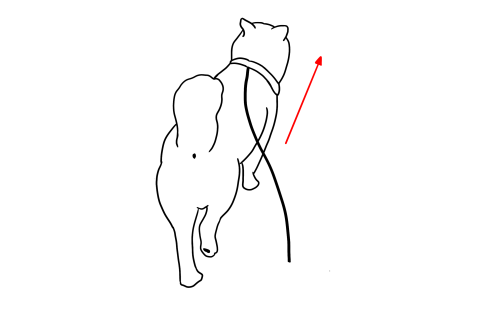
In most cases, it starts simply as a habit. For example, a dog that always walks on the owner’s right side and tends to pull on the leash may develop a habit of moving slightly to the left. If it remains just a habit, it’s not a big problem. But as dogs grow older, these habits become ingrained in the body, and walking straight can become difficult. That’s why it’s important to begin care early—while it’s still possible to reset these patterns.
It’s a muscle that runs along both sides of the neck. This muscle works when the dog turns its head side to side, looks to the left or right, or tilts its head. Because it attaches to the shoulder blade, the dog’s neck angle and ease of movement are greatly influenced by the position, angle, and flexibility of its shoulder blades.
Watch Video
Dogs rotate their scapulae when they walk. This muscle is active when pulling the front leg forward. As dogs enter their senior years, muscle loss tends to begin in the hind legs, causing increased weight-bearing on the front legs. When the paw pads of the front legs are positioned further back to support this weight, the load on this area increases significantly.
Watch Video
Dogs rotate their scapulae when walking, and this muscle is used to generate propulsion with the front legs.Therefore, dogs with weakening hind legs inevitably place greater load on this area. When it becomes stiff, it becomes difficult for the front legs to move forward, causing a reduction in stride length.
Watch Video
It is the muscle that supports the elbow. Dogs stand with their weight shifted forward onto their front legs, essentially holding a position similar to being midway through a push-up. Therefore, regardless of posture, as long as weight is borne on the front legs, this area is constantly under load, making it an important focus for care.
Watch Video
For dogs with a forward weight distribution, this muscle, which supports the wrist—the part of the front leg closest to the ground—is a very important area. Since this joint is at the very front in the direction of movement, it absorbs significant impact during sudden stops or landings from heights. Therefore, maintaining flexibility in this area is crucial to prevent wrist injuries.
Watch Video
Because dogs stand with their weight shifted onto their front legs and lack a clavicle, the muscles connecting the front legs to the torso are constantly under strain, making simply standing tiring. Therefore, as dogs enter their senior years, this area can easily develop muscle stiffness just from standing.When this area becomes stiff, dogs may struggle with steps and tire more easily during walks.If you are aware of its position, this muscle can be accessed via the chest and is definitely a key area to focus on during care.
Watch Video
It can be said to be the most important inner muscle for dogs that bear weight primarily on their front legs. It originates from the back of the scapula and inserts onto the ribs.Since this muscle is located behind the scapula, it cannot be felt from the outside, but you can target it by stretching the scapula. In senior dogs, loss of flexibility in this muscle can limit the stride length of the front legs. If left untreated, muscle loss will begin in the hind legs. It’s important to provide care while the dog can still walk.
Watch Video
These are the muscles that connect the upper part of the shoulder blade to the head, cervical vertebrae, and thoracic vertebrae. When dogs walk, they rotate their shoulder blades, and these muscles function when pushing the front legs backward. When this area becomes stiff, it restricts the rotation of the shoulder blades, making it harder for the front legs to move forward. As a result, the stride becomes restricted, and in senior dogs, walking becomes tiring, making it difficult for them to walk long distances.
Watch Video
These muscles connect the upper part of the scapula to the thoracic vertebrae. This muscle connects the upper part of the scapula to the thoracic vertebrae. Since dogs only walk forward, their front legs tend to become stiff in a position as if they've fully pushed off backward. At that time, this muscle becomes tense, and when touched from the outside, it is perceived as tightness in the back. However, simply massaging this area directly when the back is stiff doesn’t have much effect.
Watch Video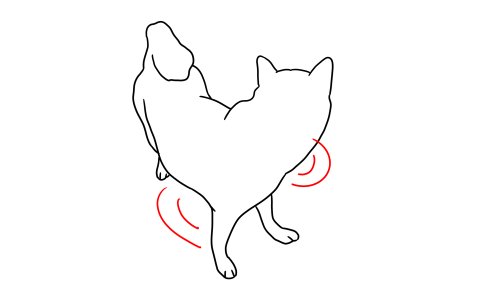
Imagine rowing a small boat. If you don’t row with equal strength on both sides, the boat won’t go straight. The same thing happens with your dog’s body. It may look as if the problem is in the hind legs, but in many cases improvement comes from caring for the front legs. That’s because dogs only move forward. Care for the shoulder blades is effective at any age—so it’s never too late to start. Please begin today.
It’s a muscle that runs along both sides of the neck. This muscle works when the dog turns its head side to side, looks to the left or right, or tilts its head. Because it attaches to the shoulder blade, the dog’s neck angle and ease of movement are greatly influenced by the position, angle, and flexibility of its shoulder blades.
Watch Video
Dogs rotate their scapulae when they walk. This muscle is active when pulling the front leg forward. As dogs enter their senior years, muscle loss tends to begin in the hind legs, causing increased weight-bearing on the front legs. When the paw pads of the front legs are positioned further back to support this weight, the load on this area increases significantly.
Watch Video
Dogs rotate their scapulae when walking, and this muscle is used to generate propulsion with the front legs.Therefore, dogs with weakening hind legs inevitably place greater load on this area. When it becomes stiff, it becomes difficult for the front legs to move forward, causing a reduction in stride length.
Watch Video
It is the muscle that supports the elbow. Dogs stand with their weight shifted forward onto their front legs, essentially holding a position similar to being midway through a push-up. Therefore, regardless of posture, as long as weight is borne on the front legs, this area is constantly under load, making it an important focus for care.
Watch Video
For dogs with a forward weight distribution, this muscle, which supports the wrist—the part of the front leg closest to the ground—is a very important area. Since this joint is at the very front in the direction of movement, it absorbs significant impact during sudden stops or landings from heights. Therefore, maintaining flexibility in this area is crucial to prevent wrist injuries.
Watch Video
These muscles are located between the ribs, filling the spaces in between. Both dogs and humans have joint structures called costosternal joints, which allow the ribs to move. Primarily during breathing, the ribs expand during inhalation and contract during exhalation. However, dogs support their body weight on their front legs, which are not connected by bones (they lack a clavicle). Because of the muscles connecting the scapula and ribs, the ribs can become restricted in movement due to the load on the front legs, leading to a loss of trunk flexibility.
Watch Video
Because dogs stand with their weight shifted onto their front legs and lack a clavicle, the muscles connecting the front legs to the torso are constantly under strain, making simply standing tiring. Therefore, as dogs enter their senior years, this area can easily develop muscle stiffness just from standing.When this area becomes stiff, dogs may struggle with steps and tire more easily during walks.If you are aware of its position, this muscle can be accessed via the chest and is definitely a key area to focus on during care.
Watch Video
It can be said to be the most important inner muscle for dogs that bear weight primarily on their front legs. It originates from the back of the scapula and inserts onto the ribs.Since this muscle is located behind the scapula, it cannot be felt from the outside, but you can target it by stretching the scapula. In senior dogs, loss of flexibility in this muscle can limit the stride length of the front legs. If left untreated, muscle loss will begin in the hind legs. It’s important to provide care while the dog can still walk.
Watch Video
These are the muscles that connect the upper part of the shoulder blade to the head, cervical vertebrae, and thoracic vertebrae. When dogs walk, they rotate their shoulder blades, and these muscles function when pushing the front legs backward. When this area becomes stiff, it restricts the rotation of the shoulder blades, making it harder for the front legs to move forward. As a result, the stride becomes restricted, and in senior dogs, walking becomes tiring, making it difficult for them to walk long distances.
Watch Video
These muscles connect the upper part of the scapula to the thoracic vertebrae. This muscle connects the upper part of the scapula to the thoracic vertebrae. Since dogs only walk forward, their front legs tend to become stiff in a position as if they've fully pushed off backward. At that time, this muscle becomes tense, and when touched from the outside, it is perceived as tightness in the back. However, simply massaging this area directly when the back is stiff doesn’t have much effect.
Watch Video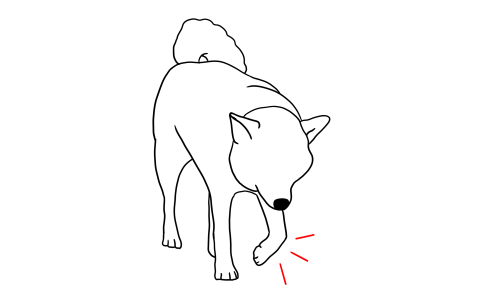
Difficulty in moving the front legs forward is a sign of stiffness. A dog’s shoulder blades rest on top of the ribcage, and because dogs do not have collarbones, the shoulder blades move only by rotating through the surrounding muscles. When the muscles that connect the shoulder blades to the ribs lose flexibility, it becomes harder for the dog to move its front legs forward. Although these muscles cannot be reached directly from the outside, you can help restore mobility by first loosening the area around the shoulder blades and then gently stretching them.
Dogs rotate their scapulae when they walk. This muscle is active when pulling the front leg forward. As dogs enter their senior years, muscle loss tends to begin in the hind legs, causing increased weight-bearing on the front legs. When the paw pads of the front legs are positioned further back to support this weight, the load on this area increases significantly.
Watch Video
Dogs rotate their scapulae when walking, and this muscle is used to generate propulsion with the front legs.Therefore, dogs with weakening hind legs inevitably place greater load on this area. When it becomes stiff, it becomes difficult for the front legs to move forward, causing a reduction in stride length.
Watch Video
Because dogs stand with their weight shifted onto their front legs and lack a clavicle, the muscles connecting the front legs to the torso are constantly under strain, making simply standing tiring. Therefore, as dogs enter their senior years, this area can easily develop muscle stiffness just from standing.When this area becomes stiff, dogs may struggle with steps and tire more easily during walks.If you are aware of its position, this muscle can be accessed via the chest and is definitely a key area to focus on during care.
Watch Video
It can be said to be the most important inner muscle for dogs that bear weight primarily on their front legs. It originates from the back of the scapula and inserts onto the ribs.Since this muscle is located behind the scapula, it cannot be felt from the outside, but you can target it by stretching the scapula. In senior dogs, loss of flexibility in this muscle can limit the stride length of the front legs. If left untreated, muscle loss will begin in the hind legs. It’s important to provide care while the dog can still walk.
Watch Video
These are the muscles that connect the upper part of the shoulder blade to the head, cervical vertebrae, and thoracic vertebrae. When dogs walk, they rotate their shoulder blades, and these muscles function when pushing the front legs backward. When this area becomes stiff, it restricts the rotation of the shoulder blades, making it harder for the front legs to move forward. As a result, the stride becomes restricted, and in senior dogs, walking becomes tiring, making it difficult for them to walk long distances.
Watch Video
These muscles connect the upper part of the scapula to the thoracic vertebrae. This muscle connects the upper part of the scapula to the thoracic vertebrae. Since dogs only walk forward, their front legs tend to become stiff in a position as if they've fully pushed off backward. At that time, this muscle becomes tense, and when touched from the outside, it is perceived as tightness in the back. However, simply massaging this area directly when the back is stiff doesn’t have much effect.
Watch Video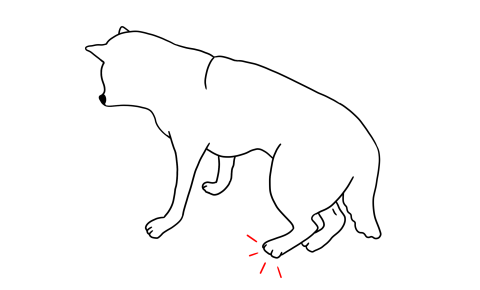
Some dogs may drag their front paws, but in most cases this symptom appears in the hind legs. When there is no neurological cause, it may be due to difficulty in flexing the ankle or limited mobility in the hip joints. If the hind leg muscles are still relatively strong, care can be very effective. And if muscle weakness has already begun, care becomes even more important—to prevent further decline.
It is the muscle that pulls the hind leg forward. Because dogs only walk forward, this muscle experiences less load compared to those that push the hind legs backward. As a result, it is a muscle that is less used and more likely to weaken quickly in senior dogs.
Watch Video
It is the muscle that pushes the hip joint backward. This muscle is used to generate propulsion with the hind legs, so it tends to be well developed in young dogs that run frequently. Most of this muscle originates from the ischium, but in senior dogs, the well-developed muscle can lose flexibility, pulling the ischium downward and causing the hips to drop or the lower back to round.
Watch Video
This muscle around the ankle works to push the toes backward, generating propulsion during hind leg movement. As dogs enter their senior years, muscle loss typically begins in the hind legs. Even if a dog’s hind legs are weakening and it becomes unsteady, dogs that keep trying to walk are likely relying heavily on this muscle. As long as this muscle remains functional, there’s a good chance the dog won’t give up using its hind legs, making it an important area to keep relaxed and cared for.
Watch Video
It is a muscle that works to move the hind leg outward. It functions to stabilize the hip joint during standing, preventing it from swaying side to side. And in senior dogs, this muscle tends to weaken more easily than other areas. Even if the thigh muscles remain strong, if the gluteal muscles weaken first, the dog may be able to walk once standing but have difficulty getting up on its own. Since it is very difficult to build muscle through training once a dog reaches its senior years, it’s important to maintain sufficient hip joint mobility while they are still young to help make them “less prone to decline.”
Watch Video
It is a muscle located in the front of the thigh. Dogs stand with their knees slightly bent, similar to a human holding a wall sit position. Put simply, dogs hold a stance that makes standing tiring. The important point is that many dogs do not properly use the vastus intermedius muscle needed to maintain this posture, and as they become seniors, this muscle is prone to weakening. Muscles reach a point where they become difficult to use before they actually begin to weaken. If care is provided at that stage, it may be possible to prevent muscle loss.
Watch Video
Dogs stand on their toes, with their heels raised off the ground. The muscles in the calf, including the flexor digitorum superficialis, work to maintain this angle. When jumping or wanting to lift the body, the dog bends the knee and ankle tightly and then quickly extends them to push off the ground and leap.Put simply, active dogs that run a lot or navigate stairs regularly engage both the vastus intermedius and these calf muscles.
Watch Video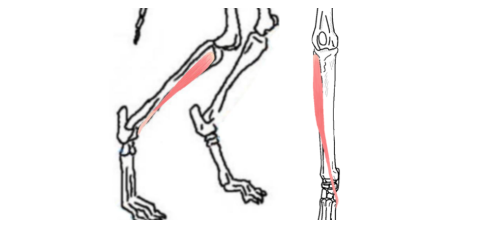
This muscle functions in knee flexion and is situated right at the back of the knee. The popliteus muscle is difficult to feel directly, and its primary function in knee flexion is to prevent the toes from dragging on the ground when the hind leg is brought forward. Therefore, it is not a muscle that typically experiences high loads. For this reason, it generally doesn’t need much manual therapy.
This muscle is located on the front lower part of the leg, just below the knee—essentially the shin—and it works when lifting the toes. Like the popliteus muscle, it helps lift the toes off the ground when the hind leg is brought forward to prevent dragging. During this movement, no weight is placed on the hind limb. Therefore, like the popliteus muscle, the tibialis anterior muscle generally does not bear significant load.
Watch Video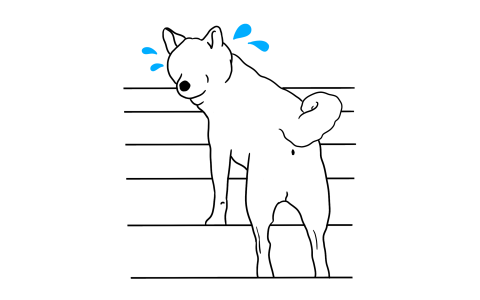
This often indicates that the range of motion in the shoulder blades is becoming limited. To go up or down steps—whether it’s stairs, a sofa, or any kind of rise—a dog must first be able to move the front legs forward enough. When climbing, the front legs need to reach the higher step; when descending, the front legs must extend forward to land safely. Without this, the dog may stumble or fall. And once a dog falls, it may stop trying to go up or down altogether, which quickly leads to muscle loss. Please help your dog maintain the ability to do these things independently—it’s an important way to protect their strength and confidence.
Dogs rotate their scapulae when walking, and this muscle is used to generate propulsion with the front legs.Therefore, dogs with weakening hind legs inevitably place greater load on this area. When it becomes stiff, it becomes difficult for the front legs to move forward, causing a reduction in stride length.
Watch Video
It is the muscle that supports the elbow. Dogs stand with their weight shifted forward onto their front legs, essentially holding a position similar to being midway through a push-up. Therefore, regardless of posture, as long as weight is borne on the front legs, this area is constantly under load, making it an important focus for care.
Watch Video
For dogs with a forward weight distribution, this muscle, which supports the wrist—the part of the front leg closest to the ground—is a very important area. Since this joint is at the very front in the direction of movement, it absorbs significant impact during sudden stops or landings from heights. Therefore, maintaining flexibility in this area is crucial to prevent wrist injuries.
Watch Video
Because dogs stand with their weight shifted onto their front legs and lack a clavicle, the muscles connecting the front legs to the torso are constantly under strain, making simply standing tiring. Therefore, as dogs enter their senior years, this area can easily develop muscle stiffness just from standing.When this area becomes stiff, dogs may struggle with steps and tire more easily during walks.If you are aware of its position, this muscle can be accessed via the chest and is definitely a key area to focus on during care.
Watch Video
It can be said to be the most important inner muscle for dogs that bear weight primarily on their front legs. It originates from the back of the scapula and inserts onto the ribs.Since this muscle is located behind the scapula, it cannot be felt from the outside, but you can target it by stretching the scapula. In senior dogs, loss of flexibility in this muscle can limit the stride length of the front legs. If left untreated, muscle loss will begin in the hind legs. It’s important to provide care while the dog can still walk.
Watch Video
These are the muscles that connect the upper part of the shoulder blade to the head, cervical vertebrae, and thoracic vertebrae. When dogs walk, they rotate their shoulder blades, and these muscles function when pushing the front legs backward. When this area becomes stiff, it restricts the rotation of the shoulder blades, making it harder for the front legs to move forward. As a result, the stride becomes restricted, and in senior dogs, walking becomes tiring, making it difficult for them to walk long distances.
Watch Video
These muscles connect the upper part of the scapula to the thoracic vertebrae. This muscle connects the upper part of the scapula to the thoracic vertebrae. Since dogs only walk forward, their front legs tend to become stiff in a position as if they've fully pushed off backward. At that time, this muscle becomes tense, and when touched from the outside, it is perceived as tightness in the back. However, simply massaging this area directly when the back is stiff doesn’t have much effect.
Watch Video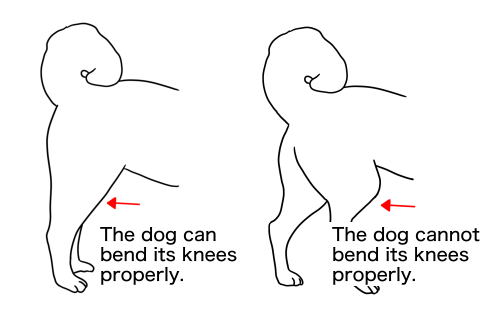
When dogs walk, they bend their knees as they bring the hind legs forward after kicking back. This bending of the knee works together with the motion of flexing the ankle. The calf muscles, which should stretch during ankle flexion, are constantly engaged to keep the dog in a ‘tip-toe’ position. Because of this, they are prone to stiffness. Once these muscles become tight, it becomes difficult for the dog to bend the knees properly.
It is the muscle that pushes the hip joint backward. This muscle is used to generate propulsion with the hind legs, so it tends to be well developed in young dogs that run frequently. Most of this muscle originates from the ischium, but in senior dogs, the well-developed muscle can lose flexibility, pulling the ischium downward and causing the hips to drop or the lower back to round.
Watch Video
This muscle around the ankle works to push the toes backward, generating propulsion during hind leg movement. As dogs enter their senior years, muscle loss typically begins in the hind legs. Even if a dog’s hind legs are weakening and it becomes unsteady, dogs that keep trying to walk are likely relying heavily on this muscle. As long as this muscle remains functional, there’s a good chance the dog won’t give up using its hind legs, making it an important area to keep relaxed and cared for.
Watch Video
It is a muscle located in the front of the thigh. Dogs stand with their knees slightly bent, similar to a human holding a wall sit position. Put simply, dogs hold a stance that makes standing tiring. The important point is that many dogs do not properly use the vastus intermedius muscle needed to maintain this posture, and as they become seniors, this muscle is prone to weakening. Muscles reach a point where they become difficult to use before they actually begin to weaken. If care is provided at that stage, it may be possible to prevent muscle loss.
Watch Video
Dogs stand on their toes, with their heels raised off the ground. The muscles in the calf, including the flexor digitorum superficialis, work to maintain this angle. When jumping or wanting to lift the body, the dog bends the knee and ankle tightly and then quickly extends them to push off the ground and leap.Put simply, active dogs that run a lot or navigate stairs regularly engage both the vastus intermedius and these calf muscles.
Watch Video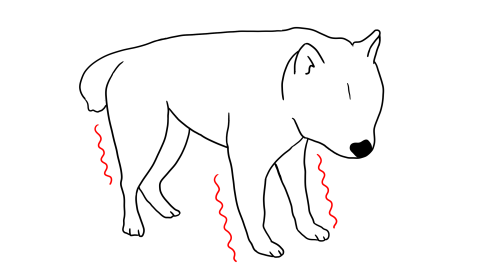
As dogs get older, many of them move stiffly when they first wake up, but by the time they return from a walk, they’re able to move normally again. Muscles tend to become stiff when they are not stretching and contracting—in other words, when there’s little movement while the dog is sleeping. To release that stiffness, there are only two options: either the dog moves on its own, or the muscles are moved from the outside. If you want your dog to walk lightly and comfortably from the very start of a walk, gentle care can make all the difference.
Dogs rotate their scapulae when walking, and this muscle is used to generate propulsion with the front legs.Therefore, dogs with weakening hind legs inevitably place greater load on this area. When it becomes stiff, it becomes difficult for the front legs to move forward, causing a reduction in stride length.
Watch Video
It is the muscle that supports the elbow. Dogs stand with their weight shifted forward onto their front legs, essentially holding a position similar to being midway through a push-up. Therefore, regardless of posture, as long as weight is borne on the front legs, this area is constantly under load, making it an important focus for care.
Watch Video
For dogs with a forward weight distribution, this muscle, which supports the wrist—the part of the front leg closest to the ground—is a very important area. Since this joint is at the very front in the direction of movement, it absorbs significant impact during sudden stops or landings from heights. Therefore, maintaining flexibility in this area is crucial to prevent wrist injuries.
Watch Video
It is the muscle that pushes the hip joint backward. This muscle is used to generate propulsion with the hind legs, so it tends to be well developed in young dogs that run frequently. Most of this muscle originates from the ischium, but in senior dogs, the well-developed muscle can lose flexibility, pulling the ischium downward and causing the hips to drop or the lower back to round.
Watch Video
This muscle around the ankle works to push the toes backward, generating propulsion during hind leg movement. As dogs enter their senior years, muscle loss typically begins in the hind legs. Even if a dog’s hind legs are weakening and it becomes unsteady, dogs that keep trying to walk are likely relying heavily on this muscle. As long as this muscle remains functional, there’s a good chance the dog won’t give up using its hind legs, making it an important area to keep relaxed and cared for.
Watch Video
It is a muscle that works to move the hind leg outward. It functions to stabilize the hip joint during standing, preventing it from swaying side to side. And in senior dogs, this muscle tends to weaken more easily than other areas. Even if the thigh muscles remain strong, if the gluteal muscles weaken first, the dog may be able to walk once standing but have difficulty getting up on its own. Since it is very difficult to build muscle through training once a dog reaches its senior years, it’s important to maintain sufficient hip joint mobility while they are still young to help make them “less prone to decline.”
Watch Video
Because dogs stand with their weight shifted onto their front legs and lack a clavicle, the muscles connecting the front legs to the torso are constantly under strain, making simply standing tiring. Therefore, as dogs enter their senior years, this area can easily develop muscle stiffness just from standing.When this area becomes stiff, dogs may struggle with steps and tire more easily during walks.If you are aware of its position, this muscle can be accessed via the chest and is definitely a key area to focus on during care.
Watch Video
It can be said to be the most important inner muscle for dogs that bear weight primarily on their front legs. It originates from the back of the scapula and inserts onto the ribs.Since this muscle is located behind the scapula, it cannot be felt from the outside, but you can target it by stretching the scapula. In senior dogs, loss of flexibility in this muscle can limit the stride length of the front legs. If left untreated, muscle loss will begin in the hind legs. It’s important to provide care while the dog can still walk.
Watch Video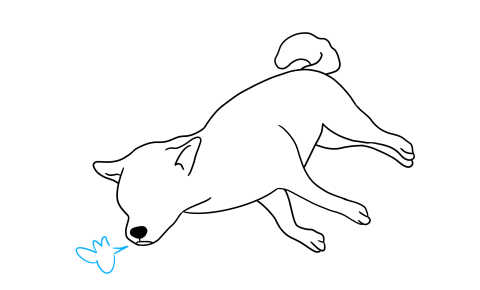
To stand up, a dog first needs to fold its legs under the body so that the pads are beneath the torso—similar to the ‘down’ position. Because dogs normally stand in a kind of ‘air-chair’ posture, even while lying down, the muscles used for standing remain tense. As dogs get older, this constant tension makes it harder for them to take the folded-leg position needed to rise. As a result, they may struggle to stand up smoothly.
It’s a muscle that runs along both sides of the neck. This muscle works when the dog turns its head side to side, looks to the left or right, or tilts its head. Because it attaches to the shoulder blade, the dog’s neck angle and ease of movement are greatly influenced by the position, angle, and flexibility of its shoulder blades.
Watch Video
Dogs rotate their scapulae when walking, and this muscle is used to generate propulsion with the front legs.Therefore, dogs with weakening hind legs inevitably place greater load on this area. When it becomes stiff, it becomes difficult for the front legs to move forward, causing a reduction in stride length.
Watch Video
It is a muscle that works to move the hind leg outward. It functions to stabilize the hip joint during standing, preventing it from swaying side to side. And in senior dogs, this muscle tends to weaken more easily than other areas. Even if the thigh muscles remain strong, if the gluteal muscles weaken first, the dog may be able to walk once standing but have difficulty getting up on its own. Since it is very difficult to build muscle through training once a dog reaches its senior years, it’s important to maintain sufficient hip joint mobility while they are still young to help make them “less prone to decline.”
Watch Video
Because dogs stand with their weight shifted onto their front legs and lack a clavicle, the muscles connecting the front legs to the torso are constantly under strain, making simply standing tiring. Therefore, as dogs enter their senior years, this area can easily develop muscle stiffness just from standing.When this area becomes stiff, dogs may struggle with steps and tire more easily during walks.If you are aware of its position, this muscle can be accessed via the chest and is definitely a key area to focus on during care.
Watch Video
It can be said to be the most important inner muscle for dogs that bear weight primarily on their front legs. It originates from the back of the scapula and inserts onto the ribs.Since this muscle is located behind the scapula, it cannot be felt from the outside, but you can target it by stretching the scapula. In senior dogs, loss of flexibility in this muscle can limit the stride length of the front legs. If left untreated, muscle loss will begin in the hind legs. It’s important to provide care while the dog can still walk.
Watch Video
These are the muscles that connect the upper part of the shoulder blade to the head, cervical vertebrae, and thoracic vertebrae. When dogs walk, they rotate their shoulder blades, and these muscles function when pushing the front legs backward. When this area becomes stiff, it restricts the rotation of the shoulder blades, making it harder for the front legs to move forward. As a result, the stride becomes restricted, and in senior dogs, walking becomes tiring, making it difficult for them to walk long distances.
Watch Video
These muscles connect the upper part of the scapula to the thoracic vertebrae. This muscle connects the upper part of the scapula to the thoracic vertebrae. Since dogs only walk forward, their front legs tend to become stiff in a position as if they've fully pushed off backward. At that time, this muscle becomes tense, and when touched from the outside, it is perceived as tightness in the back. However, simply massaging this area directly when the back is stiff doesn’t have much effect.
Watch Video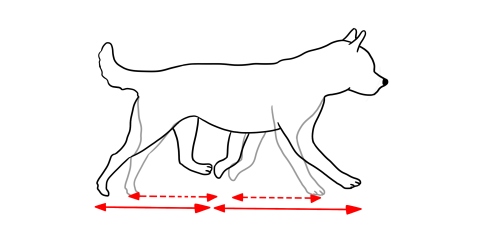
This may be a sign that your dog’s stride is becoming shorter. Walking with a shortened stride—or compensating for it by moving the torso—often makes walking more tiring than before. In most cases, restrictions in stride begin with the front legs. And very often, the cause is stiffness in the muscles that connect the shoulder blades to the body.
It’s a muscle that runs along both sides of the neck. This muscle works when the dog turns its head side to side, looks to the left or right, or tilts its head. Because it attaches to the shoulder blade, the dog’s neck angle and ease of movement are greatly influenced by the position, angle, and flexibility of its shoulder blades.
Watch Video
Dogs rotate their scapulae when walking, and this muscle is used to generate propulsion with the front legs.Therefore, dogs with weakening hind legs inevitably place greater load on this area. When it becomes stiff, it becomes difficult for the front legs to move forward, causing a reduction in stride length.
Watch Video
It is the muscle that pushes the hip joint backward. This muscle is used to generate propulsion with the hind legs, so it tends to be well developed in young dogs that run frequently. Most of this muscle originates from the ischium, but in senior dogs, the well-developed muscle can lose flexibility, pulling the ischium downward and causing the hips to drop or the lower back to round.
Watch Video
This muscle around the ankle works to push the toes backward, generating propulsion during hind leg movement. As dogs enter their senior years, muscle loss typically begins in the hind legs. Even if a dog’s hind legs are weakening and it becomes unsteady, dogs that keep trying to walk are likely relying heavily on this muscle. As long as this muscle remains functional, there’s a good chance the dog won’t give up using its hind legs, making it an important area to keep relaxed and cared for.
Watch Video
Because dogs stand with their weight shifted onto their front legs and lack a clavicle, the muscles connecting the front legs to the torso are constantly under strain, making simply standing tiring. Therefore, as dogs enter their senior years, this area can easily develop muscle stiffness just from standing.When this area becomes stiff, dogs may struggle with steps and tire more easily during walks.If you are aware of its position, this muscle can be accessed via the chest and is definitely a key area to focus on during care.
Watch Video
It can be said to be the most important inner muscle for dogs that bear weight primarily on their front legs. It originates from the back of the scapula and inserts onto the ribs.Since this muscle is located behind the scapula, it cannot be felt from the outside, but you can target it by stretching the scapula. In senior dogs, loss of flexibility in this muscle can limit the stride length of the front legs. If left untreated, muscle loss will begin in the hind legs. It’s important to provide care while the dog can still walk.
Watch Video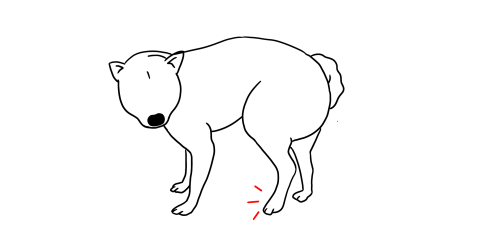
Dogs with patellar luxation often tend to hop on one leg. While osteopathy cannot cure patellar luxation itself, restoring flexibility to the muscles around the affected knee can make a real difference—many dogs actually become less prone to hopping after care. Even if we cannot change the skeletal structure, maintaining flexibility in the supporting muscles is very important. Because the knees work in connection with the ankles, caring for the calf muscles is especially important for dogs that show frequent hopping.
It is the muscle that pushes the hip joint backward. This muscle is used to generate propulsion with the hind legs, so it tends to be well developed in young dogs that run frequently. Most of this muscle originates from the ischium, but in senior dogs, the well-developed muscle can lose flexibility, pulling the ischium downward and causing the hips to drop or the lower back to round.
Watch Video
This muscle around the ankle works to push the toes backward, generating propulsion during hind leg movement. As dogs enter their senior years, muscle loss typically begins in the hind legs. Even if a dog’s hind legs are weakening and it becomes unsteady, dogs that keep trying to walk are likely relying heavily on this muscle. As long as this muscle remains functional, there’s a good chance the dog won’t give up using its hind legs, making it an important area to keep relaxed and cared for.
Watch Video
It is a muscle located in the front of the thigh. Dogs stand with their knees slightly bent, similar to a human holding a wall sit position. Put simply, dogs hold a stance that makes standing tiring. The important point is that many dogs do not properly use the vastus intermedius muscle needed to maintain this posture, and as they become seniors, this muscle is prone to weakening. Muscles reach a point where they become difficult to use before they actually begin to weaken. If care is provided at that stage, it may be possible to prevent muscle loss.
Watch Video
Dogs stand on their toes, with their heels raised off the ground. The muscles in the calf, including the flexor digitorum superficialis, work to maintain this angle. When jumping or wanting to lift the body, the dog bends the knee and ankle tightly and then quickly extends them to push off the ground and leap.Put simply, active dogs that run a lot or navigate stairs regularly engage both the vastus intermedius and these calf muscles.
Watch Video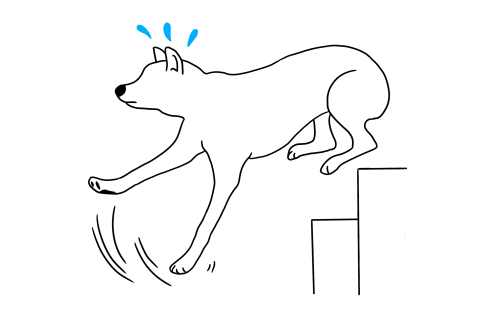
This is a sign that your dog is having difficulty moving the front legs forward. Compared to walking on flat ground, going down a step requires the front legs to reach farther forward. Without this, the body’s weight shifts too far ahead, and the dog may stumble and fall because it cannot control the landing. The ability to move the front legs forward depends on the range of motion in the rotation of the shoulder blades. Stretching and other care for the shoulder blades are very effective, so it’s something we strongly recommend.
Dogs rotate their scapulae when walking, and this muscle is used to generate propulsion with the front legs.Therefore, dogs with weakening hind legs inevitably place greater load on this area. When it becomes stiff, it becomes difficult for the front legs to move forward, causing a reduction in stride length.
Watch Video
Because dogs stand with their weight shifted onto their front legs and lack a clavicle, the muscles connecting the front legs to the torso are constantly under strain, making simply standing tiring. Therefore, as dogs enter their senior years, this area can easily develop muscle stiffness just from standing.When this area becomes stiff, dogs may struggle with steps and tire more easily during walks.If you are aware of its position, this muscle can be accessed via the chest and is definitely a key area to focus on during care.
Watch Video
It can be said to be the most important inner muscle for dogs that bear weight primarily on their front legs. It originates from the back of the scapula and inserts onto the ribs.Since this muscle is located behind the scapula, it cannot be felt from the outside, but you can target it by stretching the scapula. In senior dogs, loss of flexibility in this muscle can limit the stride length of the front legs. If left untreated, muscle loss will begin in the hind legs. It’s important to provide care while the dog can still walk.
Watch Video
“It may be that your dog feels as if its legs are ‘heavy.’ To put it simply, this means the muscles have become stiff and lost their flexibility. Muscles can only contract on their own; they cannot actively stretch. As dogs grow older, their muscles become less able to stretch. And if a muscle cannot stretch, it also cannot contract properly—this is what makes the legs feel heavy. If your dog still runs from time to time, it means they still want to run. Please help by loosening those muscles so they can move more freely.
Dogs rotate their scapulae when they walk. This muscle is active when pulling the front leg forward. As dogs enter their senior years, muscle loss tends to begin in the hind legs, causing increased weight-bearing on the front legs. When the paw pads of the front legs are positioned further back to support this weight, the load on this area increases significantly.
Watch Video
It is the muscle that supports the elbow. Dogs stand with their weight shifted forward onto their front legs, essentially holding a position similar to being midway through a push-up. Therefore, regardless of posture, as long as weight is borne on the front legs, this area is constantly under load, making it an important focus for care.
Watch Video
For dogs with a forward weight distribution, this muscle, which supports the wrist—the part of the front leg closest to the ground—is a very important area. Since this joint is at the very front in the direction of movement, it absorbs significant impact during sudden stops or landings from heights. Therefore, maintaining flexibility in this area is crucial to prevent wrist injuries.
Watch Video
It is the muscle that pulls the hind leg forward. Because dogs only walk forward, this muscle experiences less load compared to those that push the hind legs backward. As a result, it is a muscle that is less used and more likely to weaken quickly in senior dogs.
Watch Video
It is the muscle that pushes the hip joint backward. This muscle is used to generate propulsion with the hind legs, so it tends to be well developed in young dogs that run frequently. Most of this muscle originates from the ischium, but in senior dogs, the well-developed muscle can lose flexibility, pulling the ischium downward and causing the hips to drop or the lower back to round.
Watch Video
This muscle around the ankle works to push the toes backward, generating propulsion during hind leg movement. As dogs enter their senior years, muscle loss typically begins in the hind legs. Even if a dog’s hind legs are weakening and it becomes unsteady, dogs that keep trying to walk are likely relying heavily on this muscle. As long as this muscle remains functional, there’s a good chance the dog won’t give up using its hind legs, making it an important area to keep relaxed and cared for.
Watch Video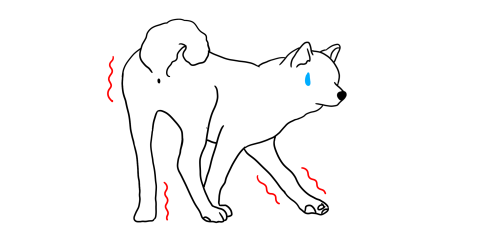
This is a sign that the gluteal muscles are beginning to weaken. As dogs grow older, muscle loss tends to appear first in the hind legs, making them more prone to losing balance. A dog may be able to walk once standing, but can still stumble and fall onto its bottom just by turning or being nudged from the side. For dogs in this condition, it is very important to maintain the flexibility of the gluteal muscles that support the hip joints. If these muscles lose flexibility and are left unattended, muscle decline cannot be prevented—even if the dog still has the will to walk.
It is a muscle that works to move the hind leg outward. It functions to stabilize the hip joint during standing, preventing it from swaying side to side. And in senior dogs, this muscle tends to weaken more easily than other areas. Even if the thigh muscles remain strong, if the gluteal muscles weaken first, the dog may be able to walk once standing but have difficulty getting up on its own. Since it is very difficult to build muscle through training once a dog reaches its senior years, it’s important to maintain sufficient hip joint mobility while they are still young to help make them “less prone to decline.”
Watch Video
Because dogs stand with their weight shifted onto their front legs and lack a clavicle, the muscles connecting the front legs to the torso are constantly under strain, making simply standing tiring. Therefore, as dogs enter their senior years, this area can easily develop muscle stiffness just from standing.When this area becomes stiff, dogs may struggle with steps and tire more easily during walks.If you are aware of its position, this muscle can be accessed via the chest and is definitely a key area to focus on during care.
Watch Video
It can be said to be the most important inner muscle for dogs that bear weight primarily on their front legs. It originates from the back of the scapula and inserts onto the ribs.Since this muscle is located behind the scapula, it cannot be felt from the outside, but you can target it by stretching the scapula. In senior dogs, loss of flexibility in this muscle can limit the stride length of the front legs. If left untreated, muscle loss will begin in the hind legs. It’s important to provide care while the dog can still walk.
Watch Video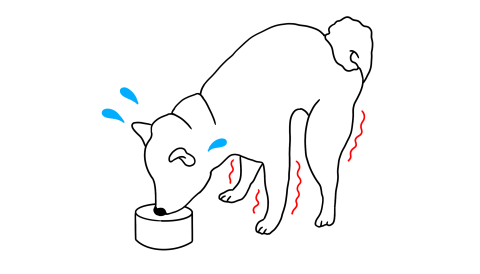
Your dog’s posture may be leaning forward, which often means they are trying to avoid putting weight on the hind legs. The reason might be pain in the hind legs, or it could simply be the beginning of muscle weakness. If X-rays show no abnormalities, we can’t know for sure—because dogs can’t tell us. However, what we can do is help prevent this forward-leaning posture from becoming a habit. With care given now, it may be possible to slow down or even prevent muscle loss in the hind legs.
Dogs rotate their scapulae when they walk. This muscle is active when pulling the front leg forward. As dogs enter their senior years, muscle loss tends to begin in the hind legs, causing increased weight-bearing on the front legs. When the paw pads of the front legs are positioned further back to support this weight, the load on this area increases significantly.
Watch Video
Dogs rotate their scapulae when walking, and this muscle is used to generate propulsion with the front legs.Therefore, dogs with weakening hind legs inevitably place greater load on this area. When it becomes stiff, it becomes difficult for the front legs to move forward, causing a reduction in stride length.
Watch Video
It is the muscle that supports the elbow. Dogs stand with their weight shifted forward onto their front legs, essentially holding a position similar to being midway through a push-up. Therefore, regardless of posture, as long as weight is borne on the front legs, this area is constantly under load, making it an important focus for care.
Watch Video
For dogs with a forward weight distribution, this muscle, which supports the wrist—the part of the front leg closest to the ground—is a very important area. Since this joint is at the very front in the direction of movement, it absorbs significant impact during sudden stops or landings from heights. Therefore, maintaining flexibility in this area is crucial to prevent wrist injuries.
Watch Video
Because dogs stand with their weight shifted onto their front legs and lack a clavicle, the muscles connecting the front legs to the torso are constantly under strain, making simply standing tiring. Therefore, as dogs enter their senior years, this area can easily develop muscle stiffness just from standing.When this area becomes stiff, dogs may struggle with steps and tire more easily during walks.If you are aware of its position, this muscle can be accessed via the chest and is definitely a key area to focus on during care.
Watch Video
It can be said to be the most important inner muscle for dogs that bear weight primarily on their front legs. It originates from the back of the scapula and inserts onto the ribs.Since this muscle is located behind the scapula, it cannot be felt from the outside, but you can target it by stretching the scapula. In senior dogs, loss of flexibility in this muscle can limit the stride length of the front legs. If left untreated, muscle loss will begin in the hind legs. It’s important to provide care while the dog can still walk.
Watch Video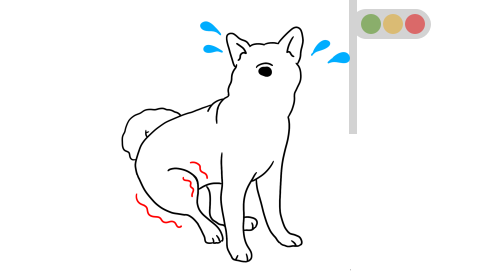
Standing still for long periods is actually more tiring for dogs than for humans—because dogs are always in a kind of ‘air-chair’ posture. You might think sitting during a stop, such as at a traffic light, would be easier for them. But in reality, the act of sitting down can be harder than simply standing. Indoors, a dog can drop into a sitting position without much problem. But on asphalt, landing heavily on the hips would hurt. To avoid that, dogs use the muscles that support the knees. When these muscles weaken, dogs begin to choose to remain standing instead.
It is a muscle that works to move the hind leg outward. It functions to stabilize the hip joint during standing, preventing it from swaying side to side. And in senior dogs, this muscle tends to weaken more easily than other areas. Even if the thigh muscles remain strong, if the gluteal muscles weaken first, the dog may be able to walk once standing but have difficulty getting up on its own. Since it is very difficult to build muscle through training once a dog reaches its senior years, it’s important to maintain sufficient hip joint mobility while they are still young to help make them “less prone to decline.”
Watch Video
It is a muscle located in the front of the thigh. Dogs stand with their knees slightly bent, similar to a human holding a wall sit position. Put simply, dogs hold a stance that makes standing tiring. The important point is that many dogs do not properly use the vastus intermedius muscle needed to maintain this posture, and as they become seniors, this muscle is prone to weakening. Muscles reach a point where they become difficult to use before they actually begin to weaken. If care is provided at that stage, it may be possible to prevent muscle loss.
Watch Video
Dogs stand on their toes, with their heels raised off the ground. The muscles in the calf, including the flexor digitorum superficialis, work to maintain this angle. When jumping or wanting to lift the body, the dog bends the knee and ankle tightly and then quickly extends them to push off the ground and leap.Put simply, active dogs that run a lot or navigate stairs regularly engage both the vastus intermedius and these calf muscles.
Watch Video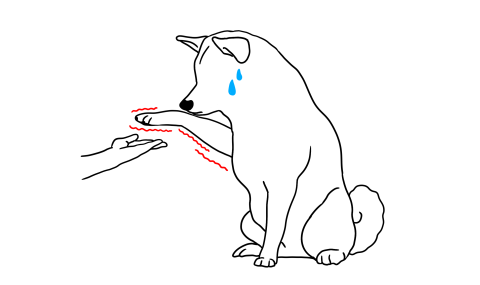
“This may be a sign that the shoulder blades have become locked and lost their range of motion. Because of this, dogs may dislike raising their paws—and may also resist when being dressed in clothes. Since dogs do not have collarbones, the chest muscles that support the front legs and torso remain under constant tension whenever they are standing. When the shoulder blades lose mobility, it becomes difficult to move the front legs forward, which is why many dogs resist the ‘give paw’ gesture. The good news is that precisely because dogs lack collarbones, muscle care around the shoulder blades is highly effective in restoring mobility.
Dogs rotate their scapulae when walking, and this muscle is used to generate propulsion with the front legs.Therefore, dogs with weakening hind legs inevitably place greater load on this area. When it becomes stiff, it becomes difficult for the front legs to move forward, causing a reduction in stride length.
Watch Video
It is the muscle that supports the elbow. Dogs stand with their weight shifted forward onto their front legs, essentially holding a position similar to being midway through a push-up. Therefore, regardless of posture, as long as weight is borne on the front legs, this area is constantly under load, making it an important focus for care.
Watch Video
For dogs with a forward weight distribution, this muscle, which supports the wrist—the part of the front leg closest to the ground—is a very important area. Since this joint is at the very front in the direction of movement, it absorbs significant impact during sudden stops or landings from heights. Therefore, maintaining flexibility in this area is crucial to prevent wrist injuries.
Watch Video
Because dogs stand with their weight shifted onto their front legs and lack a clavicle, the muscles connecting the front legs to the torso are constantly under strain, making simply standing tiring. Therefore, as dogs enter their senior years, this area can easily develop muscle stiffness just from standing.When this area becomes stiff, dogs may struggle with steps and tire more easily during walks.If you are aware of its position, this muscle can be accessed via the chest and is definitely a key area to focus on during care.
Watch Video
It can be said to be the most important inner muscle for dogs that bear weight primarily on their front legs. It originates from the back of the scapula and inserts onto the ribs.Since this muscle is located behind the scapula, it cannot be felt from the outside, but you can target it by stretching the scapula. In senior dogs, loss of flexibility in this muscle can limit the stride length of the front legs. If left untreated, muscle loss will begin in the hind legs. It’s important to provide care while the dog can still walk.
Watch Video
These are the muscles that connect the upper part of the shoulder blade to the head, cervical vertebrae, and thoracic vertebrae. When dogs walk, they rotate their shoulder blades, and these muscles function when pushing the front legs backward. When this area becomes stiff, it restricts the rotation of the shoulder blades, making it harder for the front legs to move forward. As a result, the stride becomes restricted, and in senior dogs, walking becomes tiring, making it difficult for them to walk long distances.
Watch Video
These muscles connect the upper part of the scapula to the thoracic vertebrae. This muscle connects the upper part of the scapula to the thoracic vertebrae. Since dogs only walk forward, their front legs tend to become stiff in a position as if they've fully pushed off backward. At that time, this muscle becomes tense, and when touched from the outside, it is perceived as tightness in the back. However, simply massaging this area directly when the back is stiff doesn’t have much effect.
Watch Video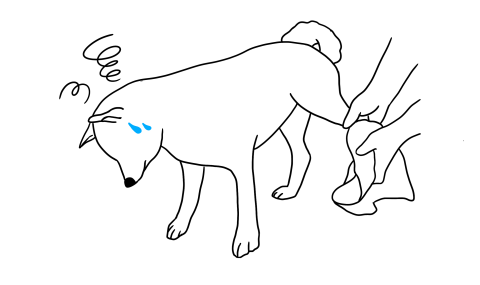
As dogs grow older, they may begin to resist lifting one of their hind legs. Just as humans have a dominant hand, dogs also have a ‘weight-bearing leg.’ Like when people stand at ease, dogs do not always distribute their weight evenly across all four legs. In their senior years, this uneven weight-bearing can become a habit, leading to stiffness and reluctance to lift the weight-bearing leg. Over time, the opposite leg—the one not carrying weight—becomes more prone to muscle loss. That’s why care to prevent these habits from setting in is so important.
It is the muscle that pushes the hip joint backward. This muscle is used to generate propulsion with the hind legs, so it tends to be well developed in young dogs that run frequently. Most of this muscle originates from the ischium, but in senior dogs, the well-developed muscle can lose flexibility, pulling the ischium downward and causing the hips to drop or the lower back to round.
Watch Video
This muscle around the ankle works to push the toes backward, generating propulsion during hind leg movement. As dogs enter their senior years, muscle loss typically begins in the hind legs. Even if a dog’s hind legs are weakening and it becomes unsteady, dogs that keep trying to walk are likely relying heavily on this muscle. As long as this muscle remains functional, there’s a good chance the dog won’t give up using its hind legs, making it an important area to keep relaxed and cared for.
Watch Video
It is a muscle that works to move the hind leg outward. It functions to stabilize the hip joint during standing, preventing it from swaying side to side. And in senior dogs, this muscle tends to weaken more easily than other areas. Even if the thigh muscles remain strong, if the gluteal muscles weaken first, the dog may be able to walk once standing but have difficulty getting up on its own. Since it is very difficult to build muscle through training once a dog reaches its senior years, it’s important to maintain sufficient hip joint mobility while they are still young to help make them “less prone to decline.”
Watch Video
Because dogs stand with their weight shifted onto their front legs and lack a clavicle, the muscles connecting the front legs to the torso are constantly under strain, making simply standing tiring. Therefore, as dogs enter their senior years, this area can easily develop muscle stiffness just from standing.When this area becomes stiff, dogs may struggle with steps and tire more easily during walks.If you are aware of its position, this muscle can be accessed via the chest and is definitely a key area to focus on during care.
Watch Video
It can be said to be the most important inner muscle for dogs that bear weight primarily on their front legs. It originates from the back of the scapula and inserts onto the ribs.Since this muscle is located behind the scapula, it cannot be felt from the outside, but you can target it by stretching the scapula. In senior dogs, loss of flexibility in this muscle can limit the stride length of the front legs. If left untreated, muscle loss will begin in the hind legs. It’s important to provide care while the dog can still walk.
Watch Video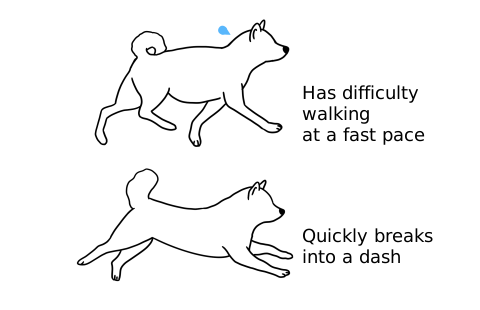
This often indicates that the range of motion in all four legs has become limited. To compensate for a shorter stride, dogs may twist their torso or bounce, choosing to run rather than walk quickly. While muscle loss in the senior years cannot be completely prevented, leaving a shortened stride unaddressed makes muscle decline more likely. Even during normal walks, the muscles in the legs are not used to their full capacity. On the other hand, if the stride is maintained, walking itself becomes a way to preserve muscle strength and slow down decline. That’s why it’s important to begin care while your dog is still able to run.
Dogs rotate their scapulae when walking, and this muscle is used to generate propulsion with the front legs.Therefore, dogs with weakening hind legs inevitably place greater load on this area. When it becomes stiff, it becomes difficult for the front legs to move forward, causing a reduction in stride length.
Watch Video
It is the muscle that supports the elbow. Dogs stand with their weight shifted forward onto their front legs, essentially holding a position similar to being midway through a push-up. Therefore, regardless of posture, as long as weight is borne on the front legs, this area is constantly under load, making it an important focus for care.
Watch Video
For dogs with a forward weight distribution, this muscle, which supports the wrist—the part of the front leg closest to the ground—is a very important area. Since this joint is at the very front in the direction of movement, it absorbs significant impact during sudden stops or landings from heights. Therefore, maintaining flexibility in this area is crucial to prevent wrist injuries.
Watch Video
It is the muscle that pulls the hind leg forward. Because dogs only walk forward, this muscle experiences less load compared to those that push the hind legs backward. As a result, it is a muscle that is less used and more likely to weaken quickly in senior dogs.
Watch Video
It is the muscle that pushes the hip joint backward. This muscle is used to generate propulsion with the hind legs, so it tends to be well developed in young dogs that run frequently. Most of this muscle originates from the ischium, but in senior dogs, the well-developed muscle can lose flexibility, pulling the ischium downward and causing the hips to drop or the lower back to round.
Watch Video
This muscle around the ankle works to push the toes backward, generating propulsion during hind leg movement. As dogs enter their senior years, muscle loss typically begins in the hind legs. Even if a dog’s hind legs are weakening and it becomes unsteady, dogs that keep trying to walk are likely relying heavily on this muscle. As long as this muscle remains functional, there’s a good chance the dog won’t give up using its hind legs, making it an important area to keep relaxed and cared for.
Watch Video
It is a muscle that works to move the hind leg outward. It functions to stabilize the hip joint during standing, preventing it from swaying side to side. And in senior dogs, this muscle tends to weaken more easily than other areas. Even if the thigh muscles remain strong, if the gluteal muscles weaken first, the dog may be able to walk once standing but have difficulty getting up on its own. Since it is very difficult to build muscle through training once a dog reaches its senior years, it’s important to maintain sufficient hip joint mobility while they are still young to help make them “less prone to decline.”
Watch Video
Because dogs stand with their weight shifted onto their front legs and lack a clavicle, the muscles connecting the front legs to the torso are constantly under strain, making simply standing tiring. Therefore, as dogs enter their senior years, this area can easily develop muscle stiffness just from standing.When this area becomes stiff, dogs may struggle with steps and tire more easily during walks.If you are aware of its position, this muscle can be accessed via the chest and is definitely a key area to focus on during care.
Watch Video
It can be said to be the most important inner muscle for dogs that bear weight primarily on their front legs. It originates from the back of the scapula and inserts onto the ribs.Since this muscle is located behind the scapula, it cannot be felt from the outside, but you can target it by stretching the scapula. In senior dogs, loss of flexibility in this muscle can limit the stride length of the front legs. If left untreated, muscle loss will begin in the hind legs. It’s important to provide care while the dog can still walk.
Watch Video