

Know the Skeleton
Simply ‘knowing’ the following content does not mean you truly ‘understand’ a dog’s skeletal structure.
If you’re going to care for a dog’s muscles, it’s essential to understand the structure of each joint, how they move, and their range of motion.
Here, we share a portion of the knowledge that can be learned at the Dog Bodywork Institute, a school specializing in canine chiropractic care.
For those who wish to learn more in detail, please refer to the pages for the Dog Bodywork Practitioner Training Course or the Canine Anatomy Online Course.
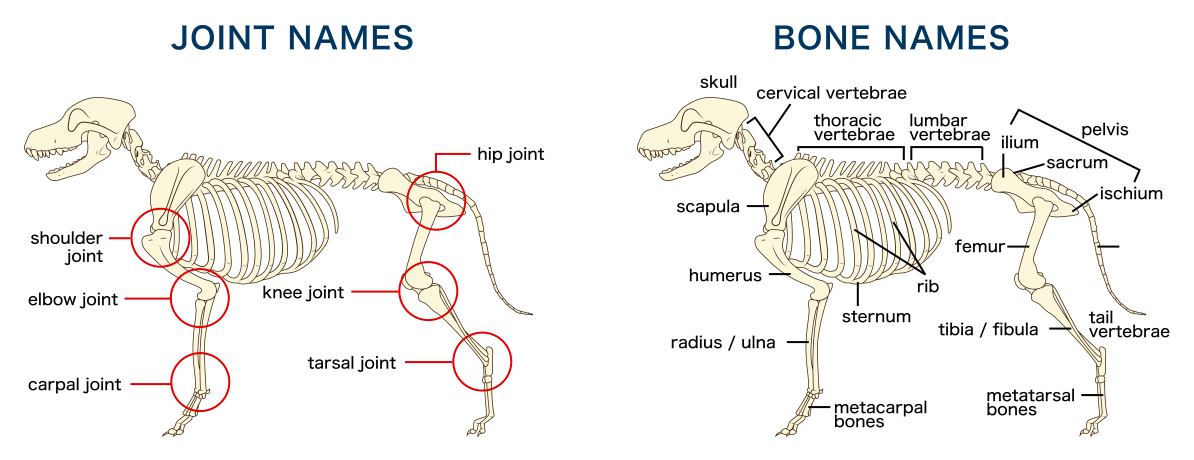
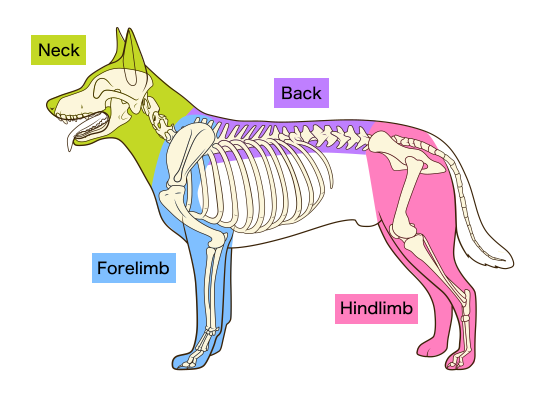
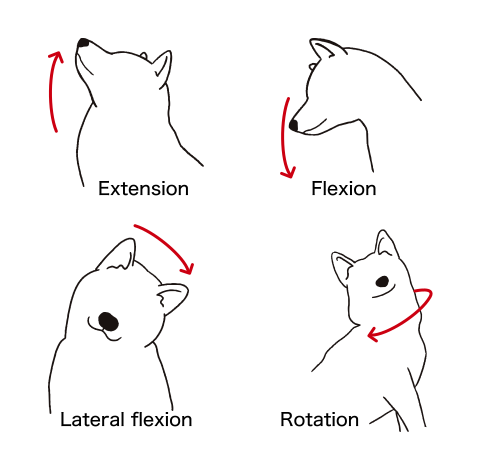
The neck moves by lowering the head, like when drinking water (flexion), and by raising the head, like when looking up at the owner (extension). Additionally, the neck is structured to allow twisting motions when looking side to side (rotation), and tilting motions when cocking the head (lateral flexion).
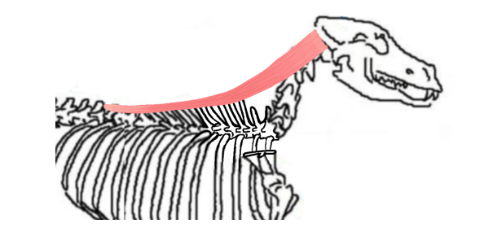
It is a muscle that runs along the back of the neck. Unlike humans, a dog’s cervical vertebrae are naturally tilted forward, so simply maintaining a posture of looking straight ahead puts a significant load on their neck. And when eating or drinking, this muscle needs to relax and stretch, making its flexibility especially important in senior dogs.
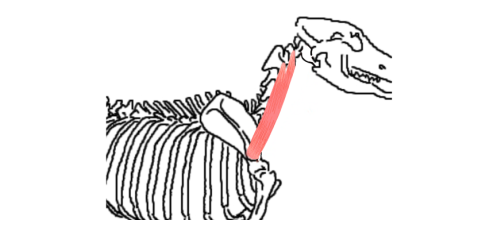
It is a muscle that runs along both sides of the neck. This muscle works when the dog turns its head side to side or tilts it. Because it attaches to the scapula, the position, angle, and flexibility of a dog’s shoulder blade greatly influence the neck’s range of motion and ease of movement."
These are foundational videos covering topics like the skeleton and muscles, as well as case-specific courses such as for patella issues. Once purchased, you can watch them repeatedly.
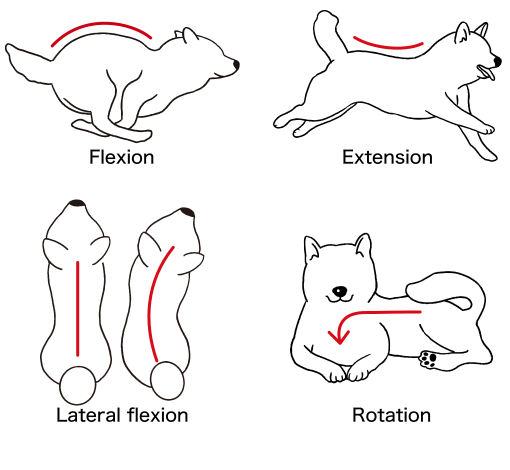
The spine is made up of block-like ‘vertebral bodies’ connected together, allowing it to bend smoothly forward (flexion), arch backward (extension), bend sideways (lateral flexion), and twist (rotation).
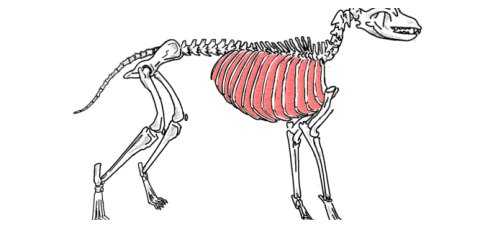
These muscles are located between the ribs, filling the spaces in between. Primarily during breathing, the ribs expand during inhalation and contract during exhalation. However, dogs support their body weight on their front legs, which are not connected by bones (they lack a clavicle). Because of the muscles connecting the scapula and ribs, the ribs can become restricted in movement due to the load on the front legs, leading to a loss of trunk flexibility.
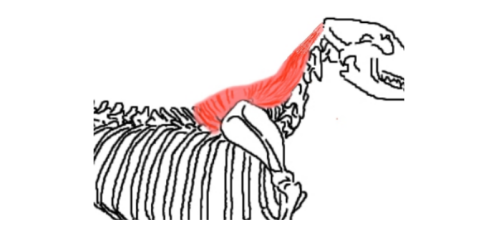
These muscles connect the upper part of the scapula with the head, cervical vertebrae, and thoracic vertebrae. Dogs rotate their scapulae when walking, and this muscle works to help push the front leg backward. When this area becomes stiff, scapular rotation is restricted, making it difficult for the dog to move its front legs forward. When stride length becomes limited, senior dogs often find walking tiring and have difficulty covering long distances.

These muscles connect the upper part of the scapula to the thoracic vertebrae. This muscle connects the upper part of the scapula to the thoracic vertebrae. Since dogs only walk forward, their front legs tend to become stiff in a position as if they've fully pushed off backward. At that time, this muscle becomes tense, and when touched from the outside, it is perceived as tightness in the back. However, simply massaging this area directly when the back is stiff doesn’t have much effect.
These are foundational videos covering topics like the skeleton and muscles, as well as case-specific courses such as for patella issues. Once purchased, you can watch them repeatedly.
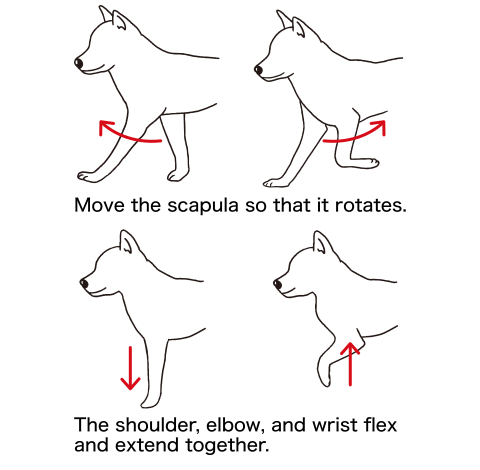
When pulling the front leg forward, the leg is folded and lifted off the ground as it moves forward; when pushing backward, the shoulder and elbow angles are maintained while the leg kicks back. During this movement, the scapula rotates. Meanwhile, the shoulder, elbow, and wrist joints generally flex and extend together in coordination.

Dogs rotate their scapulae when they walk. This muscle is active when pulling the front leg forward. As dogs enter their senior years, muscle loss tends to begin in the hind legs, causing increased weight-bearing on the front legs. When the paw pads of the front legs are positioned further back to support this weight, the load on this area increases significantly.
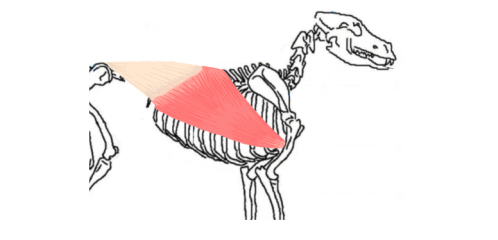
Dogs rotate their scapulae when walking, and this muscle is used to generate propulsion with the front legs. Therefore, dogs with weakening hind legs inevitably place greater load on this area. When it becomes stiff, it becomes difficult for the front legs to move forward, causing a reduction in stride length.
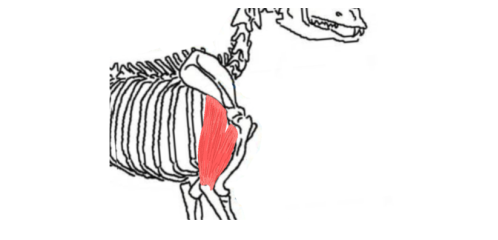
It is a muscle that supports the elbow. Dogs stand with their weight shifted forward onto their front legs, essentially holding a position similar to being midway through a push-up. Therefore, whenever the dog’s weight is on the front legs—regardless of the posture—this area is always under load, making it an important spot to focus care on.

For dogs with a forward-weighted stance, this muscle, which supports the wrist—the part of the front leg closest to the ground—is extremely important. Since this joint is at the very front of the direction of movement while walking, it absorbs significant impact during sudden stops or landings from heights. Therefore, maintaining flexibility in this area is crucial to prevent wrist injuries.
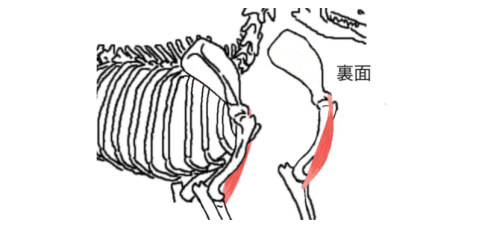
When dogs walk, they swing their limbs back and forth, but after fully pushing the hind leg backward, the front leg must be folded when moving it forward to avoid dragging the toes on the ground. This muscle is used during that movement, so it isn’t heavily engaged during weight-bearing activities like standing or walking.
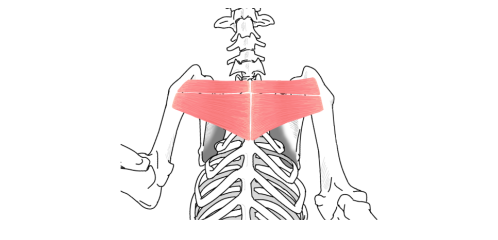
Because dogs stand with their weight shifted onto their front legs and lack a clavicle, the muscles connecting the front legs to the torso are constantly under strain, making simply standing tiring. Therefore, as dogs enter their senior years, this area can easily develop muscle stiffness just from standing. When this area becomes stiff, dogs may struggle with steps and tire more easily during walks. If you are aware of its position, this muscle can be accessed via the chest and is definitely a key area to focus on during care.
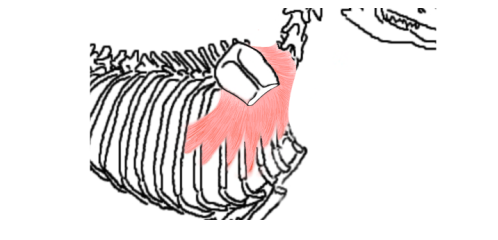
It can be said to be the most important inner muscle for dogs that bear weight primarily on their front legs. It originates from the back of the scapula and inserts onto the ribs. Since this muscle is located behind the scapula, it cannot be felt from the outside, but you can target it by stretching the scapula. In senior dogs, loss of flexibility in this muscle can limit the stride length of the front legs. If left untreated, muscle loss will begin in the hind legs. It’s important to provide care while the dog can still walk.
These are foundational videos covering topics like the skeleton and muscles, as well as case-specific courses such as for patella issues. Once purchased, you can watch them repeatedly.
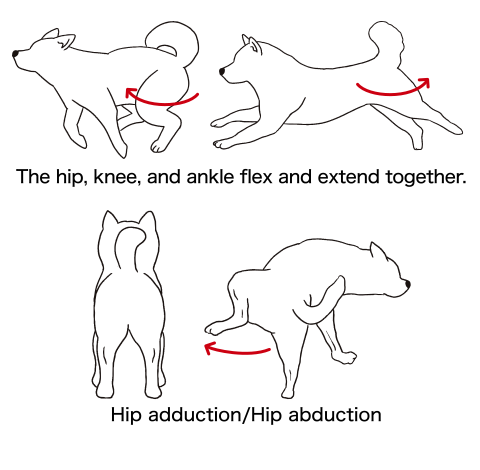
When pushing the hind leg backward, the dog shifts weight onto it to propel forward; when bringing the leg forward, it folds and lifts the leg off the ground. During this movement, hip flexion occurs simultaneously with flexion of the knee and ankle dorsiflexion. Flexion and extension of the hind limbs typically occur as a coordinated set. The hip joint is a ball-and-socket joint, so in addition to flexion and extension, it can also move outward (abduction) and inward (adduction).
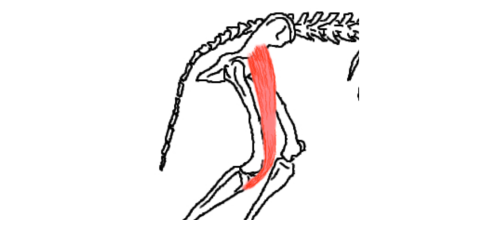
It is the muscle that pulls the hind leg forward. Because dogs only walk forward, this muscle experiences less load compared to those that push the hind legs backward. As a result, it is a muscle that is less used and more likely to weaken quickly in senior dogs.

It is the muscle that pushes the hip joint backward. This muscle is used to generate propulsion with the hind legs, so it tends to be well developed in young dogs that run frequently. Most of this muscle originates from the ischium, but in senior dogs, the well-developed muscle can lose flexibility, pulling the ischium downward and causing the hips to drop or the lower back to round.
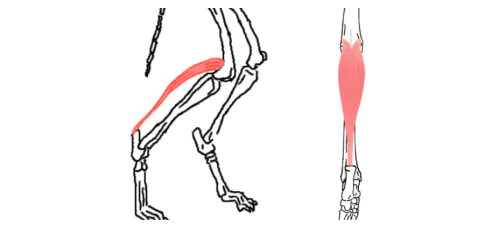
This muscle around the ankle works to push the toes backward, generating propulsion during hind leg movement. As dogs enter their senior years, muscle loss typically begins in the hind legs. Even if a dog’s hind legs are weakening and it becomes unsteady, dogs that keep trying to walk are likely relying heavily on this muscle. As long as this muscle remains functional, there’s a good chance the dog won’t give up using its hind legs, making it an important area to keep relaxed and cared for.
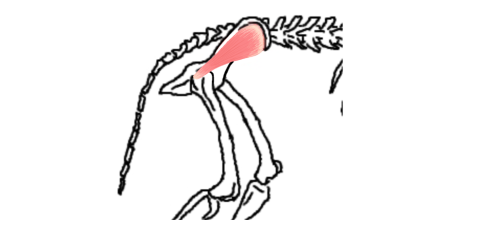
This muscle is responsible for abducting the hind leg. It functions to support the hip joint during standing, preventing lateral sway. It is also a muscle that tends to weaken more easily than others as dogs age. If the thigh muscles remain strong but the gluteal muscles weaken first, the dog may be able to walk once standing but finds it difficult to stand up on its own. It is very difficult to build muscle through strength training once dogs become seniors, so it’s important to maintain ample hip joint mobility while they’re still young to help prevent decline.
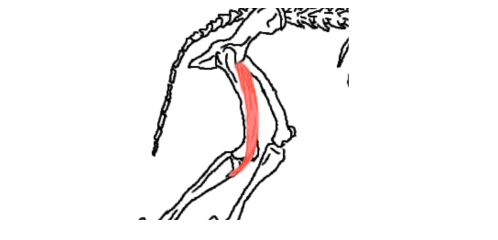
It is a muscle located in the front of the thigh. Dogs stand with their knees slightly bent, similar to a human holding a wall sit position. Put simply, dogs hold a stance that makes standing tiring. The important point is that many dogs do not properly use the vastus intermedius muscle needed to maintain this posture, and as they become seniors, this muscle is prone to weakening. Muscles reach a point where they become difficult to use before they actually begin to weaken. If care is provided at that stage, it may be possible to prevent muscle loss.
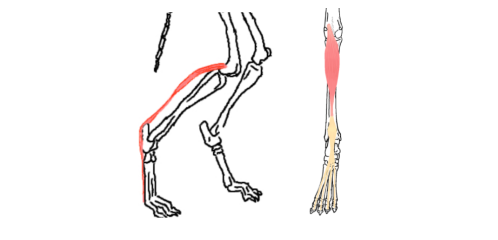
Dogs stand on their toes, with their heels raised off the ground. The muscles in the calf, including the flexor digitorum superficialis, work to maintain this angle. When jumping or wanting to lift the body, the dog bends the knee and ankle tightly and then quickly extends them to push off the ground and leap. Put simply, active dogs that run a lot or navigate stairs regularly engage both the vastus intermedius and these calf muscles.
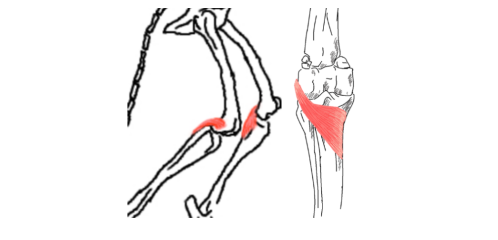
This muscle functions in knee flexion and is situated right at the back of the knee. The popliteus muscle is difficult to feel directly, and its primary function in knee flexion is to prevent the toes from dragging on the ground when the hind leg is brought forward. Therefore, it is not a muscle that typically experiences high loads. For this reason, it generally doesn’t need much manual therapy.
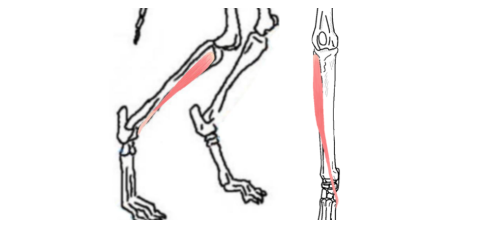
This muscle is located on the front lower part of the leg, just below the knee—essentially the shin—and it works when lifting the toes. Like the popliteus muscle, it helps lift the toes off the ground when the hind leg is brought forward to prevent dragging. During this movement, no weight is placed on the hind limb. Therefore, like the popliteus muscle, the tibialis anterior muscle generally does not bear significant load.
These are foundational videos covering topics like the skeleton and muscles, as well as case-specific courses such as for patella issues. Once purchased, you can watch them repeatedly.
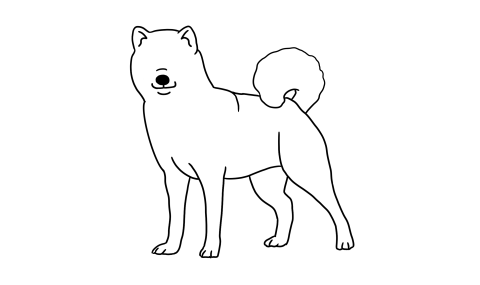
Forelimbs: The torso is supported by the scapula and chest muscles, while the shoulder and elbow joints remain stationary during this.
Hind limbs: Muscles are used to stabilize the hip, knee, and ankle joints at a specific angle.
It is a muscle that supports the elbow. Dogs stand with their weight shifted forward onto their front legs, essentially holding a position similar to being midway through a push-up. Therefore, whenever the dog’s weight is on the front legs—regardless of the posture—this area is always under load, making it an important spot to focus care on.
For dogs with a forward-weighted stance, this muscle, which supports the wrist—the part of the front leg closest to the ground—is extremely important. Since this joint is at the very front of the direction of movement while walking, it absorbs significant impact during sudden stops or landings from heights. Therefore, maintaining flexibility in this area is crucial to prevent wrist injuries.
This muscle is responsible for abducting the hind leg. It functions to support the hip joint during standing, preventing lateral sway. It is also a muscle that tends to weaken more easily than others as dogs age. If the thigh muscles remain strong but the gluteal muscles weaken first, the dog may be able to walk once standing but finds it difficult to stand up on its own. It is very difficult to build muscle through strength training once dogs become seniors, so it’s important to maintain ample hip joint mobility while they’re still young to help prevent decline.
It is a muscle located in the front of the thigh. Dogs stand with their knees slightly bent, similar to a human holding a wall sit position. Put simply, dogs hold a stance that makes standing tiring. The important point is that many dogs do not properly use the vastus intermedius muscle needed to maintain this posture, and as they become seniors, this muscle is prone to weakening. Muscles reach a point where they become difficult to use before they actually begin to weaken. If care is provided at that stage, it may be possible to prevent muscle loss.
Dogs stand on their toes, with their heels raised off the ground. The muscles in the calf, including the flexor digitorum superficialis, work to maintain this angle. When jumping or wanting to lift the body, the dog bends the knee and ankle tightly and then quickly extends them to push off the ground and leap. Put simply, active dogs that run a lot or navigate stairs regularly engage both the vastus intermedius and these calf muscles.
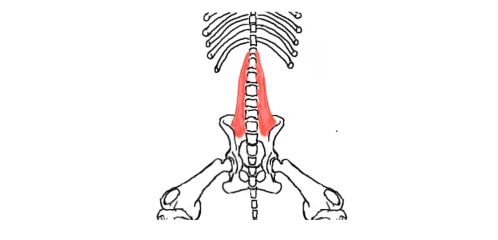
This muscle runs along the sides of the lumbar vertebrae and is active when rounding the lower back or bending it side to side. In small to medium-sized dogs, as they enter their senior years, they tend to adopt a posture where the ischium is pulled downward due to tension in the hamstrings. This area then becomes a site of secondary muscle stiffness. When the lower back is rounded, you may feel inclined to massage the back, but it’s ineffective unless you also relieve tension in the hip joints.
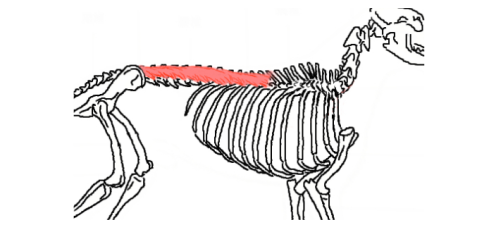
This muscle runs along the lumbar vertebrae and is active when extending or laterally flexing the lower back. It is common for senior dogs with rounded backs to have this area extremely tight, and many show discomfort or pain when it is touched. However, just because the lower back is rounded or the dog shows pain in the back, it doesn’t mean massaging the lower back alone is sufficient. The true cause of tightness in this area, leading to a rounded lower back, is likely related to issues in the limbs. This muscle is particularly important among the muscles, but unfortunately, since it is located on the backside of the scapula, it is difficult to palpate externally.However, when this muscle becomes tight, it can pull on the ribs, limiting the stride length of the forelimbs, causing asymmetry between left and right sides, and even leading to twisting habits in the torso. Therefore, it is an important area to care for.
These muscles are located between the ribs, filling the spaces in between. Primarily during breathing, the ribs expand during inhalation and contract during exhalation. However, dogs support their body weight on their front legs, which are not connected by bones (they lack a clavicle). Because of the muscles connecting the scapula and ribs, the ribs can become restricted in movement due to the load on the front legs, leading to a loss of trunk flexibility.
These are foundational videos covering topics like the skeleton and muscles, as well as case-specific courses such as for patella issues. Once purchased, you can watch them repeatedly.
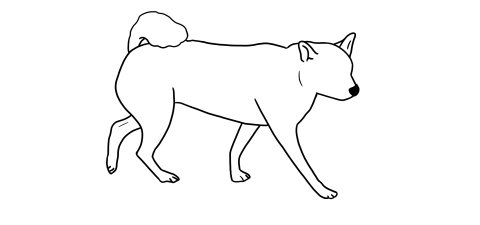
Both the forelimbs and hindlimbs bear weight when pushing backward. When moving forward, they are lifted off the ground, so the load on each limb differs.
Dogs rotate their scapulae when walking, and this muscle is used to generate propulsion with the front legs. Therefore, dogs with weakening hind legs inevitably place greater load on this area. When it becomes stiff, it becomes difficult for the front legs to move forward, causing a reduction in stride length.
It is the muscle that pushes the hip joint backward. This muscle is used to generate propulsion with the hind legs, so it tends to be well developed in young dogs that run frequently. Most of this muscle originates from the ischium, but in senior dogs, the well-developed muscle can lose flexibility, pulling the ischium downward and causing the hips to drop or the lower back to round.
This muscle around the ankle works to push the toes backward, generating propulsion during hind leg movement. As dogs enter their senior years, muscle loss typically begins in the hind legs. Even if a dog’s hind legs are weakening and it becomes unsteady, dogs that keep trying to walk are likely relying heavily on this muscle. As long as this muscle remains functional, there’s a good chance the dog won’t give up using its hind legs, making it an important area to keep relaxed and cared for.
These muscles connect the upper part of the scapula with the head, cervical vertebrae, and thoracic vertebrae. Dogs rotate their scapulae when walking, and this muscle works to help push the front leg backward. When this area becomes stiff, scapular rotation is restricted, making it difficult for the dog to move its front legs forward. When stride length becomes limited, senior dogs often find walking tiring and have difficulty covering long distances.
These muscles connect the upper part of the scapula to the thoracic vertebrae. This muscle connects the upper part of the scapula to the thoracic vertebrae. Since dogs only walk forward, their front legs tend to become stiff in a position as if they've fully pushed off backward. At that time, this muscle becomes tense, and when touched from the outside, it is perceived as tightness in the back. However, simply massaging this area directly when the back is stiff doesn’t have much effect.
These are foundational videos covering topics like the skeleton and muscles, as well as case-specific courses such as for patella issues. Once purchased, you can watch them repeatedly.
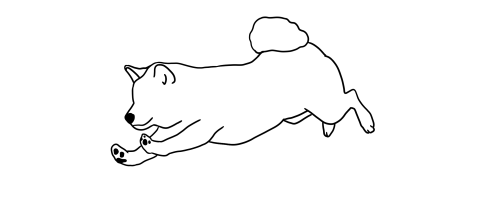
Basically, it is the same as ‘1. Walking’. Running involves a brief moment when the body is completely airborne. Therefore, running requires an element of jumping in addition to walking. To propel themselves, dogs use their knees when pushing off with the hind legs. During a full sprint, the flexion and extension of the spine also play an important role.
It is a muscle located in the front of the thigh. Dogs stand with their knees slightly bent, similar to a human holding a wall sit position. Put simply, dogs hold a stance that makes standing tiring. The important point is that many dogs do not properly use the vastus intermedius muscle needed to maintain this posture, and as they become seniors, this muscle is prone to weakening. Muscles reach a point where they become difficult to use before they actually begin to weaken. If care is provided at that stage, it may be possible to prevent muscle loss.
Dogs stand on their toes, with their heels raised off the ground. The muscles in the calf, including the flexor digitorum superficialis, work to maintain this angle. When jumping or wanting to lift the body, the dog bends the knee and ankle tightly and then quickly extends them to push off the ground and leap. Put simply, active dogs that run a lot or navigate stairs regularly engage both the vastus intermedius and these calf muscles.
Dogs rotate their scapulae when walking, and this muscle is used to generate propulsion with the front legs. Therefore, dogs with weakening hind legs inevitably place greater load on this area. When it becomes stiff, it becomes difficult for the front legs to move forward, causing a reduction in stride length.
It is the muscle that pushes the hip joint backward. This muscle is used to generate propulsion with the hind legs, so it tends to be well developed in young dogs that run frequently. Most of this muscle originates from the ischium, but in senior dogs, the well-developed muscle can lose flexibility, pulling the ischium downward and causing the hips to drop or the lower back to round.
This muscle around the ankle works to push the toes backward, generating propulsion during hind leg movement. As dogs enter their senior years, muscle loss typically begins in the hind legs. Even if a dog’s hind legs are weakening and it becomes unsteady, dogs that keep trying to walk are likely relying heavily on this muscle. As long as this muscle remains functional, there’s a good chance the dog won’t give up using its hind legs, making it an important area to keep relaxed and cared for.
These are foundational videos covering topics like the skeleton and muscles, as well as case-specific courses such as for patella issues. Once purchased, you can watch them repeatedly.
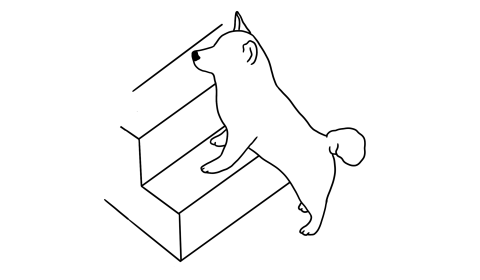
First, the pads of the forelimbs need to reach the next step. To do this, the front legs must be lifted higher than during regular walking. While this movement may seem to rely heavily on the shoulder and elbow joints, the most crucial action is the rotation of the scapula. Then, the elbow bends, adding a ‘jumping’ motion to the movement.
Dogs rotate their scapulae when they walk. This muscle is active when pulling the front leg forward. As dogs enter their senior years, muscle loss tends to begin in the hind legs, causing increased weight-bearing on the front legs. When the paw pads of the front legs are positioned further back to support this weight, the load on this area increases significantly.
When dogs walk, they swing their limbs back and forth, but after fully pushing the hind leg backward, the front leg must be folded when moving it forward to avoid dragging the toes on the ground. This muscle is used during that movement, so it isn’t heavily engaged during weight-bearing activities like standing or walking.
It is a muscle located in the front of the thigh. Dogs stand with their knees slightly bent, similar to a human holding a wall sit position. Put simply, dogs hold a stance that makes standing tiring. The important point is that many dogs do not properly use the vastus intermedius muscle needed to maintain this posture, and as they become seniors, this muscle is prone to weakening. Muscles reach a point where they become difficult to use before they actually begin to weaken. If care is provided at that stage, it may be possible to prevent muscle loss.
Dogs stand on their toes, with their heels raised off the ground. The muscles in the calf, including the flexor digitorum superficialis, work to maintain this angle. When jumping or wanting to lift the body, the dog bends the knee and ankle tightly and then quickly extends them to push off the ground and leap. Put simply, active dogs that run a lot or navigate stairs regularly engage both the vastus intermedius and these calf muscles.
These are foundational videos covering topics like the skeleton and muscles, as well as case-specific courses such as for patella issues. Once purchased, you can watch them repeatedly.
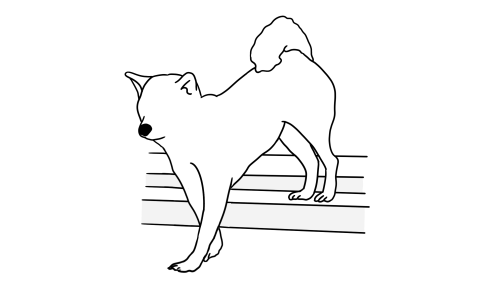
If the stride length is the same as when walking on flat ground, the dog’s center of gravity can cause it to stumble forward upon landing on a lower step. To prevent this, the paw pads need to be placed further forward than when walking on level surfaces.
Dogs rotate their scapulae when they walk. This muscle is active when pulling the front leg forward. As dogs enter their senior years, muscle loss tends to begin in the hind legs, causing increased weight-bearing on the front legs. When the paw pads of the front legs are positioned further back to support this weight, the load on this area increases significantly.
These are foundational videos covering topics like the skeleton and muscles, as well as case-specific courses such as for patella issues. Once purchased, you can watch them repeatedly.
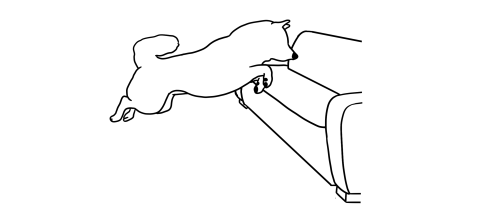
When climbing onto a surface higher than stairs, the dog first needs to move from a back-horizontal position to an inclined posture by raising its head. Although it may appear that the back muscles are being used, the dog is actually pushing against the ground with its forelimbs. This movement includes a jumping action.
When dogs walk, they swing their limbs back and forth, but after fully pushing the hind leg backward, the front leg must be folded when moving it forward to avoid dragging the toes on the ground. This muscle is used during that movement, so it isn’t heavily engaged during weight-bearing activities like standing or walking.
For dogs with a forward-weighted stance, this muscle, which supports the wrist—the part of the front leg closest to the ground—is extremely important. Since this joint is at the very front of the direction of movement while walking, it absorbs significant impact during sudden stops or landings from heights. Therefore, maintaining flexibility in this area is crucial to prevent wrist injuries.
Dogs rotate their scapulae when they walk. This muscle is active when pulling the front leg forward. As dogs enter their senior years, muscle loss tends to begin in the hind legs, causing increased weight-bearing on the front legs. When the paw pads of the front legs are positioned further back to support this weight, the load on this area increases significantly.
It is a muscle located in the front of the thigh. Dogs stand with their knees slightly bent, similar to a human holding a wall sit position. Put simply, dogs hold a stance that makes standing tiring. The important point is that many dogs do not properly use the vastus intermedius muscle needed to maintain this posture, and as they become seniors, this muscle is prone to weakening. Muscles reach a point where they become difficult to use before they actually begin to weaken. If care is provided at that stage, it may be possible to prevent muscle loss.
Dogs stand on their toes, with their heels raised off the ground. The muscles in the calf, including the flexor digitorum superficialis, work to maintain this angle. When jumping or wanting to lift the body, the dog bends the knee and ankle tightly and then quickly extends them to push off the ground and leap. Put simply, active dogs that run a lot or navigate stairs regularly engage both the vastus intermedius and these calf muscles.
This muscle runs along the lumbar vertebrae and is active when extending or laterally flexing the lower back. It is common for senior dogs with rounded backs to have this area extremely tight, and many show discomfort or pain when it is touched. However, just because the lower back is rounded or the dog shows pain in the back, it doesn’t mean massaging the lower back alone is sufficient. The true cause of tightness in this area, leading to a rounded lower back, is likely related to issues in the limbs. This muscle is particularly important among the muscles, but unfortunately, since it is located on the backside of the scapula, it is difficult to palpate externally.However, when this muscle becomes tight, it can pull on the ribs, limiting the stride length of the forelimbs, causing asymmetry between left and right sides, and even leading to twisting habits in the torso. Therefore, it is an important area to care for.
These are foundational videos covering topics like the skeleton and muscles, as well as case-specific courses such as for patella issues. Once purchased, you can watch them repeatedly.
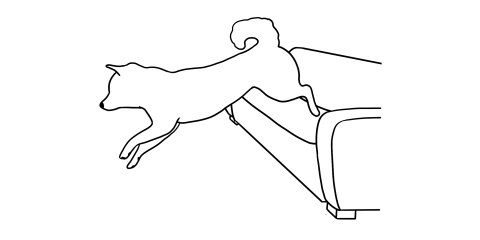
Basically, it is the same as descending stairs, but since the dog is coming down from a higher place than stairs, it needs to absorb a greater impact. To prevent the shock from reaching the spine, the shoulder, elbow, wrist joints, and scapula act as cushions. The chest muscles supporting the scapula play the most significant role.
Dogs rotate their scapulae when they walk. This muscle is active when pulling the front leg forward. As dogs enter their senior years, muscle loss tends to begin in the hind legs, causing increased weight-bearing on the front legs. When the paw pads of the front legs are positioned further back to support this weight, the load on this area increases significantly.
Dogs rotate their scapulae when walking, and this muscle is used to generate propulsion with the front legs. Therefore, dogs with weakening hind legs inevitably place greater load on this area. When it becomes stiff, it becomes difficult for the front legs to move forward, causing a reduction in stride length.
It is a muscle that supports the elbow. Dogs stand with their weight shifted forward onto their front legs, essentially holding a position similar to being midway through a push-up. Therefore, whenever the dog’s weight is on the front legs—regardless of the posture—this area is always under load, making it an important spot to focus care on.
For dogs with a forward-weighted stance, this muscle, which supports the wrist—the part of the front leg closest to the ground—is extremely important. Since this joint is at the very front of the direction of movement while walking, it absorbs significant impact during sudden stops or landings from heights. Therefore, maintaining flexibility in this area is crucial to prevent wrist injuries.
Because dogs stand with their weight shifted onto their front legs and lack a clavicle, the muscles connecting the front legs to the torso are constantly under strain, making simply standing tiring. Therefore, as dogs enter their senior years, this area can easily develop muscle stiffness just from standing. When this area becomes stiff, dogs may struggle with steps and tire more easily during walks. If you are aware of its position, this muscle can be accessed via the chest and is definitely a key area to focus on during care.
It can be said to be the most important inner muscle for dogs that bear weight primarily on their front legs. It originates from the back of the scapula and inserts onto the ribs. Since this muscle is located behind the scapula, it cannot be felt from the outside, but you can target it by stretching the scapula. In senior dogs, loss of flexibility in this muscle can limit the stride length of the front legs. If left untreated, muscle loss will begin in the hind legs. It’s important to provide care while the dog can still walk.
These are foundational videos covering topics like the skeleton and muscles, as well as case-specific courses such as for patella issues. Once purchased, you can watch them repeatedly.
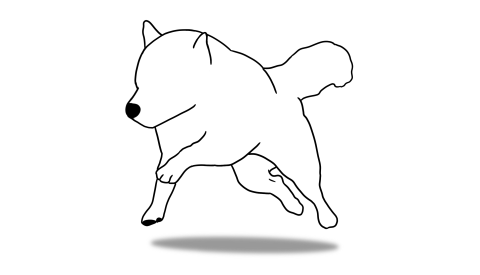
It is the movement that follows climbing stairs or getting onto the sofa. Basically, it is the same as running, but while running involves pushing backward, jumping involves pushing downward. In other words, the hind paw pads push the ground downwards to lift the entire body.
It is a muscle located in the front of the thigh. Dogs stand with their knees slightly bent, similar to a human holding a wall sit position. Put simply, dogs hold a stance that makes standing tiring. The important point is that many dogs do not properly use the vastus intermedius muscle needed to maintain this posture, and as they become seniors, this muscle is prone to weakening. Muscles reach a point where they become difficult to use before they actually begin to weaken. If care is provided at that stage, it may be possible to prevent muscle loss.
Dogs stand on their toes, with their heels raised off the ground. The muscles in the calf, including the flexor digitorum superficialis, work to maintain this angle. When jumping or wanting to lift the body, the dog bends the knee and ankle tightly and then quickly extends them to push off the ground and leap. Put simply, active dogs that run a lot or navigate stairs regularly engage both the vastus intermedius and these calf muscles.
These are foundational videos covering topics like the skeleton and muscles, as well as case-specific courses such as for patella issues. Once purchased, you can watch them repeatedly.
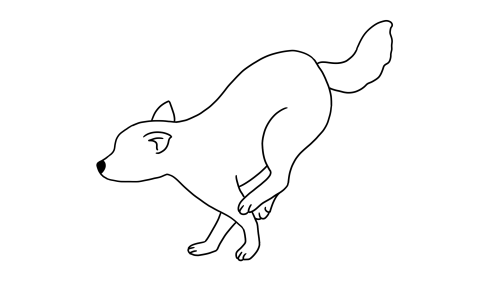
Similar to getting off the sofa, but whether the dog stays there or immediately starts running afterward changes which muscles around the scapula bear the load.
Dogs rotate their scapulae when walking, and this muscle is used to generate propulsion with the front legs. Therefore, dogs with weakening hind legs inevitably place greater load on this area. When it becomes stiff, it becomes difficult for the front legs to move forward, causing a reduction in stride length.
It is a muscle that supports the elbow. Dogs stand with their weight shifted forward onto their front legs, essentially holding a position similar to being midway through a push-up. Therefore, whenever the dog’s weight is on the front legs—regardless of the posture—this area is always under load, making it an important spot to focus care on.
For dogs with a forward-weighted stance, this muscle, which supports the wrist—the part of the front leg closest to the ground—is extremely important. Since this joint is at the very front of the direction of movement while walking, it absorbs significant impact during sudden stops or landings from heights. Therefore, maintaining flexibility in this area is crucial to prevent wrist injuries.
Because dogs stand with their weight shifted onto their front legs and lack a clavicle, the muscles connecting the front legs to the torso are constantly under strain, making simply standing tiring. Therefore, as dogs enter their senior years, this area can easily develop muscle stiffness just from standing. When this area becomes stiff, dogs may struggle with steps and tire more easily during walks. If you are aware of its position, this muscle can be accessed via the chest and is definitely a key area to focus on during care.
It can be said to be the most important inner muscle for dogs that bear weight primarily on their front legs. It originates from the back of the scapula and inserts onto the ribs. Since this muscle is located behind the scapula, it cannot be felt from the outside, but you can target it by stretching the scapula. In senior dogs, loss of flexibility in this muscle can limit the stride length of the front legs. If left untreated, muscle loss will begin in the hind legs. It’s important to provide care while the dog can still walk.
These are foundational videos covering topics like the skeleton and muscles, as well as case-specific courses such as for patella issues. Once purchased, you can watch them repeatedly.
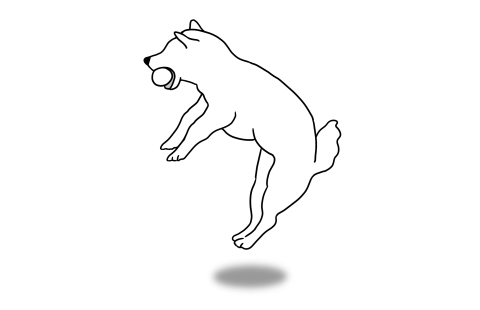
Similar to sitting, but with greater impact, so the load is higher. It’s often misunderstood that this movement transmits shock mainly to the lower back, but since landing on the forelimbs also sends impact to the spine, it’s inaccurate to say that only landing on the hind limbs is risky. The impact from landing on the hind limbs can be absorbed effectively if the muscles around the hip, knee, and tarsal joints are functioning properly.
It is the muscle that pushes the hip joint backward. This muscle is used to generate propulsion with the hind legs, so it tends to be well developed in young dogs that run frequently. Most of this muscle originates from the ischium, but in senior dogs, the well-developed muscle can lose flexibility, pulling the ischium downward and causing the hips to drop or the lower back to round.
This muscle around the ankle works to push the toes backward, generating propulsion during hind leg movement. As dogs enter their senior years, muscle loss typically begins in the hind legs. Even if a dog’s hind legs are weakening and it becomes unsteady, dogs that keep trying to walk are likely relying heavily on this muscle. As long as this muscle remains functional, there’s a good chance the dog won’t give up using its hind legs, making it an important area to keep relaxed and cared for.
It is a muscle located in the front of the thigh. Dogs stand with their knees slightly bent, similar to a human holding a wall sit position. Put simply, dogs hold a stance that makes standing tiring. The important point is that many dogs do not properly use the vastus intermedius muscle needed to maintain this posture, and as they become seniors, this muscle is prone to weakening. Muscles reach a point where they become difficult to use before they actually begin to weaken. If care is provided at that stage, it may be possible to prevent muscle loss.
Dogs stand on their toes, with their heels raised off the ground. The muscles in the calf, including the flexor digitorum superficialis, work to maintain this angle. When jumping or wanting to lift the body, the dog bends the knee and ankle tightly and then quickly extends them to push off the ground and leap. Put simply, active dogs that run a lot or navigate stairs regularly engage both the vastus intermedius and these calf muscles.
These are foundational videos covering topics like the skeleton and muscles, as well as case-specific courses such as for patella issues. Once purchased, you can watch them repeatedly.
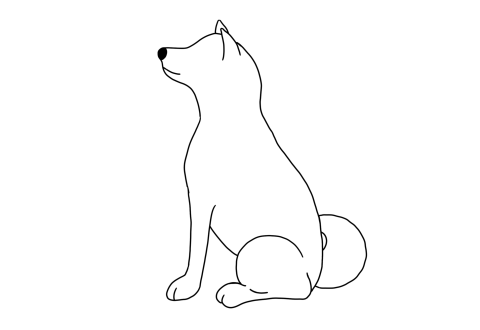
The hind limb muscles normally used for standing are intentionally allowed to ‘give way to gravity.’ Since simply dropping the hips would obviously cause pain, the dog applies a controlled ‘braking’ to land gently. Although the muscles used for sitting are the same as those used for standing, the way they are used differs. However, when sitting with weight shifted onto the forelimbs, different muscles are engaged.
It is the muscle that pushes the hip joint backward. This muscle is used to generate propulsion with the hind legs, so it tends to be well developed in young dogs that run frequently. Most of this muscle originates from the ischium, but in senior dogs, the well-developed muscle can lose flexibility, pulling the ischium downward and causing the hips to drop or the lower back to round.
This muscle around the ankle works to push the toes backward, generating propulsion during hind leg movement. As dogs enter their senior years, muscle loss typically begins in the hind legs. Even if a dog’s hind legs are weakening and it becomes unsteady, dogs that keep trying to walk are likely relying heavily on this muscle. As long as this muscle remains functional, there’s a good chance the dog won’t give up using its hind legs, making it an important area to keep relaxed and cared for.
It is a muscle located in the front of the thigh. Dogs stand with their knees slightly bent, similar to a human holding a wall sit position. Put simply, dogs hold a stance that makes standing tiring. The important point is that many dogs do not properly use the vastus intermedius muscle needed to maintain this posture, and as they become seniors, this muscle is prone to weakening. Muscles reach a point where they become difficult to use before they actually begin to weaken. If care is provided at that stage, it may be possible to prevent muscle loss.
Dogs stand on their toes, with their heels raised off the ground. The muscles in the calf, including the flexor digitorum superficialis, work to maintain this angle. When jumping or wanting to lift the body, the dog bends the knee and ankle tightly and then quickly extends them to push off the ground and leap. Put simply, active dogs that run a lot or navigate stairs regularly engage both the vastus intermedius and these calf muscles.
These are foundational videos covering topics like the skeleton and muscles, as well as case-specific courses such as for patella issues. Once purchased, you can watch them repeatedly.
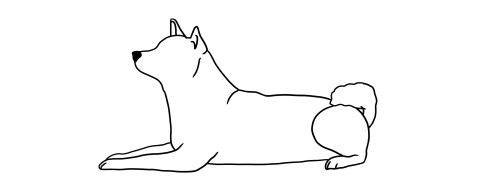
Unless a dog is very lazy, when attempting to lie down (‘down’ position), it first sits and settles its hips before folding its forelimbs to lower its chest. During this movement, the dog uses its shoulders, elbows, and scapulae to gently brake and avoid slamming its chest to the ground. If the elbows are extended forward like a sphinx, it indicates that scapular rotation is occurring.
Dogs rotate their scapulae when walking, and this muscle is used to generate propulsion with the front legs. Therefore, dogs with weakening hind legs inevitably place greater load on this area. When it becomes stiff, it becomes difficult for the front legs to move forward, causing a reduction in stride length.
It is a muscle that supports the elbow. Dogs stand with their weight shifted forward onto their front legs, essentially holding a position similar to being midway through a push-up. Therefore, whenever the dog’s weight is on the front legs—regardless of the posture—this area is always under load, making it an important spot to focus care on.
For dogs with a forward-weighted stance, this muscle, which supports the wrist—the part of the front leg closest to the ground—is extremely important. Since this joint is at the very front of the direction of movement while walking, it absorbs significant impact during sudden stops or landings from heights. Therefore, maintaining flexibility in this area is crucial to prevent wrist injuries.
It is a muscle located in the front of the thigh. Dogs stand with their knees slightly bent, similar to a human holding a wall sit position. Put simply, dogs hold a stance that makes standing tiring. The important point is that many dogs do not properly use the vastus intermedius muscle needed to maintain this posture, and as they become seniors, this muscle is prone to weakening. Muscles reach a point where they become difficult to use before they actually begin to weaken. If care is provided at that stage, it may be possible to prevent muscle loss.
Dogs stand on their toes, with their heels raised off the ground. The muscles in the calf, including the flexor digitorum superficialis, work to maintain this angle. When jumping or wanting to lift the body, the dog bends the knee and ankle tightly and then quickly extends them to push off the ground and leap. Put simply, active dogs that run a lot or navigate stairs regularly engage both the vastus intermedius and these calf muscles.
These are foundational videos covering topics like the skeleton and muscles, as well as case-specific courses such as for patella issues. Once purchased, you can watch them repeatedly.
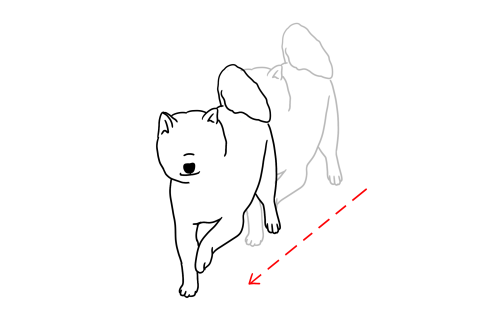
Have you ever tripped and fallen? When we humans suddenly stop while walking, inertia can cause us to fall forward. Since dogs walk on four legs, they don’t usually fall forward like humans do. However, when they try to stop suddenly on asphalt, their paw pads can get scraped. To avoid falling or scraping their paws, dogs take 2 to 3 steps to gradually slow down and absorb the momentum (acting as brakes). Although used differently, the muscles that move the forelimbs forward are engaged.
Dogs rotate their scapulae when they walk. This muscle is active when pulling the front leg forward. As dogs enter their senior years, muscle loss tends to begin in the hind legs, causing increased weight-bearing on the front legs. When the paw pads of the front legs are positioned further back to support this weight, the load on this area increases significantly.
These are foundational videos covering topics like the skeleton and muscles, as well as case-specific courses such as for patella issues. Once purchased, you can watch them repeatedly.
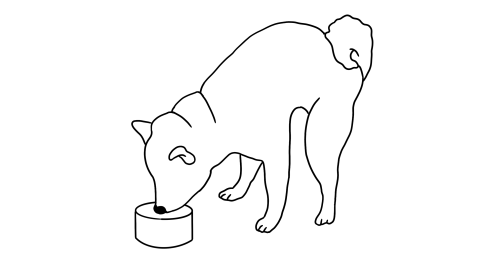
It is the movement of leaning forward and lowering the neck. Since gravity also acts on the neck, lowering the neck with force causes the muzzle to plunge into the water abruptly. That’s why the muscles usually used to lift the neck are, in this case, working as a brake. As a result, weight shifts onto the forelimbs, placing increased load on the muscles of the front legs.
It is a muscle that runs along the back of the neck. Unlike humans, a dog’s cervical vertebrae are naturally tilted forward, so simply maintaining a posture of looking straight ahead puts a significant load on their neck. And when eating or drinking, this muscle needs to relax and stretch, making its flexibility especially important in senior dogs.
Dogs rotate their scapulae when they walk. This muscle is active when pulling the front leg forward. As dogs enter their senior years, muscle loss tends to begin in the hind legs, causing increased weight-bearing on the front legs. When the paw pads of the front legs are positioned further back to support this weight, the load on this area increases significantly.
It is a muscle that supports the elbow. Dogs stand with their weight shifted forward onto their front legs, essentially holding a position similar to being midway through a push-up. Therefore, whenever the dog’s weight is on the front legs—regardless of the posture—this area is always under load, making it an important spot to focus care on.
For dogs with a forward-weighted stance, this muscle, which supports the wrist—the part of the front leg closest to the ground—is extremely important. Since this joint is at the very front of the direction of movement while walking, it absorbs significant impact during sudden stops or landings from heights. Therefore, maintaining flexibility in this area is crucial to prevent wrist injuries.
These muscles connect the upper part of the scapula with the head, cervical vertebrae, and thoracic vertebrae. Dogs rotate their scapulae when walking, and this muscle works to help push the front leg backward. When this area becomes stiff, scapular rotation is restricted, making it difficult for the dog to move its front legs forward. When stride length becomes limited, senior dogs often find walking tiring and have difficulty covering long distances.
These muscles connect the upper part of the scapula to the thoracic vertebrae. This muscle connects the upper part of the scapula to the thoracic vertebrae. Since dogs only walk forward, their front legs tend to become stiff in a position as if they've fully pushed off backward. At that time, this muscle becomes tense, and when touched from the outside, it is perceived as tightness in the back. However, simply massaging this area directly when the back is stiff doesn’t have much effect.
These are foundational videos covering topics like the skeleton and muscles, as well as case-specific courses such as for patella issues. Once purchased, you can watch them repeatedly.
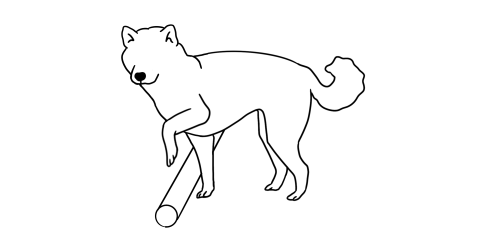
When stepping over something, the dog must lift its paw pads higher than when walking to avoid tripping. At this time, the coordinated movement of the shoulder, elbow, and wrist joints occurs, folding the forelimb. Visibly, the movement involves these three joints, but in reality, scapular rotation is also occurring, which can be considered the key movement.
Dogs rotate their scapulae when they walk. This muscle is active when pulling the front leg forward. As dogs enter their senior years, muscle loss tends to begin in the hind legs, causing increased weight-bearing on the front legs. When the paw pads of the front legs are positioned further back to support this weight, the load on this area increases significantly.
When dogs walk, they swing their limbs back and forth, but after fully pushing the hind leg backward, the front leg must be folded when moving it forward to avoid dragging the toes on the ground. This muscle is used during that movement, so it isn’t heavily engaged during weight-bearing activities like standing or walking.
These are foundational videos covering topics like the skeleton and muscles, as well as case-specific courses such as for patella issues. Once purchased, you can watch them repeatedly.
Lowering the neck is similar to the movement used when drinking water. To lower the back, similar to ‘lying down,’ the dog bends its shoulders and elbows to bring the chest close to the ground without fully resting it. However, the dog uses its postural muscles to apply brakes and avoid slamming the chest into the ground.
It is a muscle that runs along the back of the neck. Unlike humans, a dog’s cervical vertebrae are naturally tilted forward, so simply maintaining a posture of looking straight ahead puts a significant load on their neck. And when eating or drinking, this muscle needs to relax and stretch, making its flexibility especially important in senior dogs.
Dogs rotate their scapulae when walking, and this muscle is used to generate propulsion with the front legs. Therefore, dogs with weakening hind legs inevitably place greater load on this area. When it becomes stiff, it becomes difficult for the front legs to move forward, causing a reduction in stride length.
It is a muscle that supports the elbow. Dogs stand with their weight shifted forward onto their front legs, essentially holding a position similar to being midway through a push-up. Therefore, whenever the dog’s weight is on the front legs—regardless of the posture—this area is always under load, making it an important spot to focus care on.
For dogs with a forward-weighted stance, this muscle, which supports the wrist—the part of the front leg closest to the ground—is extremely important. Since this joint is at the very front of the direction of movement while walking, it absorbs significant impact during sudden stops or landings from heights. Therefore, maintaining flexibility in this area is crucial to prevent wrist injuries.
These muscles connect the upper part of the scapula with the head, cervical vertebrae, and thoracic vertebrae. Dogs rotate their scapulae when walking, and this muscle works to help push the front leg backward. When this area becomes stiff, scapular rotation is restricted, making it difficult for the dog to move its front legs forward. When stride length becomes limited, senior dogs often find walking tiring and have difficulty covering long distances.
These muscles connect the upper part of the scapula to the thoracic vertebrae. This muscle connects the upper part of the scapula to the thoracic vertebrae. Since dogs only walk forward, their front legs tend to become stiff in a position as if they've fully pushed off backward. At that time, this muscle becomes tense, and when touched from the outside, it is perceived as tightness in the back. However, simply massaging this area directly when the back is stiff doesn’t have much effect.
These are foundational videos covering topics like the skeleton and muscles, as well as case-specific courses such as for patella issues. Once purchased, you can watch them repeatedly.
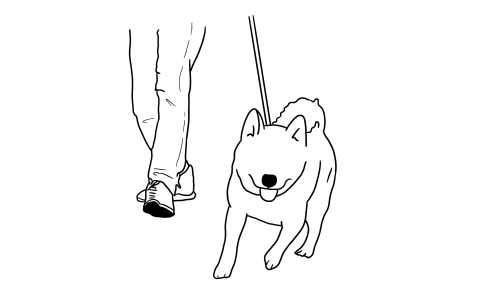
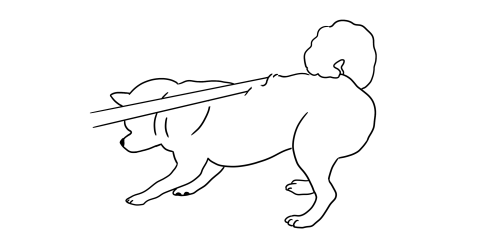
When pulling on the leash, the same muscles used for walking and running are engaged. When pulling on a toy, both the forelimbs and hind limbs use the muscles that move the limbs forward, but the load on these muscles is greater than during regular walking, running, or forward movement.
Dogs rotate their scapulae when walking, and this muscle is used to generate propulsion with the front legs. Therefore, dogs with weakening hind legs inevitably place greater load on this area. When it becomes stiff, it becomes difficult for the front legs to move forward, causing a reduction in stride length.
It is the muscle that pushes the hip joint backward. This muscle is used to generate propulsion with the hind legs, so it tends to be well developed in young dogs that run frequently. Most of this muscle originates from the ischium, but in senior dogs, the well-developed muscle can lose flexibility, pulling the ischium downward and causing the hips to drop or the lower back to round.
This muscle around the ankle works to push the toes backward, generating propulsion during hind leg movement. As dogs enter their senior years, muscle loss typically begins in the hind legs. Even if a dog’s hind legs are weakening and it becomes unsteady, dogs that keep trying to walk are likely relying heavily on this muscle. As long as this muscle remains functional, there’s a good chance the dog won’t give up using its hind legs, making it an important area to keep relaxed and cared for.
These are foundational videos covering topics like the skeleton and muscles, as well as case-specific courses such as for patella issues. Once purchased, you can watch them repeatedly.
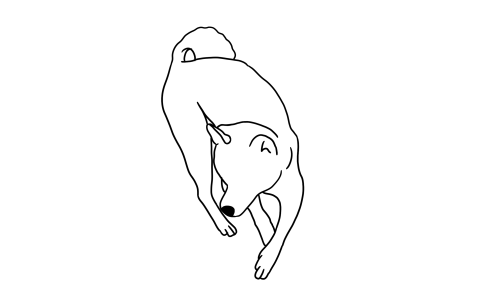
Just like a boat turns left when you only row on the right side, a dog turns by pushing off only with the outer leg while not using the inner leg. Except at very high speeds, dogs steer curves with their forelimbs, while the hind limbs simply push forward. At this time, the dog uses its gluteal muscles to prevent falling due to centrifugal force.
Dogs rotate their scapulae when they walk. This muscle is active when pulling the front leg forward. As dogs enter their senior years, muscle loss tends to begin in the hind legs, causing increased weight-bearing on the front legs. When the paw pads of the front legs are positioned further back to support this weight, the load on this area increases significantly.
Dogs rotate their scapulae when walking, and this muscle is used to generate propulsion with the front legs. Therefore, dogs with weakening hind legs inevitably place greater load on this area. When it becomes stiff, it becomes difficult for the front legs to move forward, causing a reduction in stride length.
These are foundational videos covering topics like the skeleton and muscles, as well as case-specific courses such as for patella issues. Once purchased, you can watch them repeatedly.
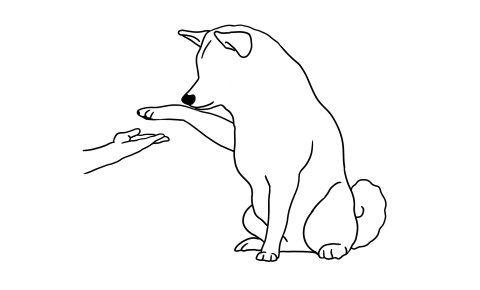
In addition to moving the forelimbs forward, the dog lifts them upward. However, whether the dog offers its paw nearby, farther away, or performs a high-five, scapular rotation becomes increasingly important in each case.
Dogs rotate their scapulae when they walk. This muscle is active when pulling the front leg forward. As dogs enter their senior years, muscle loss tends to begin in the hind legs, causing increased weight-bearing on the front legs. When the paw pads of the front legs are positioned further back to support this weight, the load on this area increases significantly.
When dogs walk, they swing their limbs back and forth, but after fully pushing the hind leg backward, the front leg must be folded when moving it forward to avoid dragging the toes on the ground. This muscle is used during that movement, so it isn’t heavily engaged during weight-bearing activities like standing or walking.
These are foundational videos covering topics like the skeleton and muscles, as well as case-specific courses such as for patella issues. Once purchased, you can watch them repeatedly.
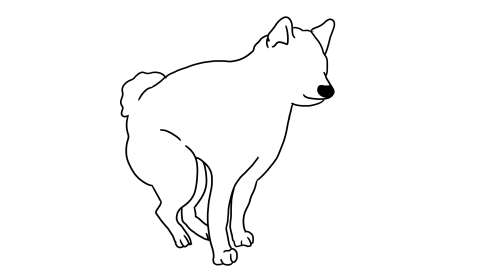
Forelimbs: The torso is supported by the scapula and pectoral muscles, with the shoulder and elbow joints remaining stationary during this. Hind limbs: Muscles are engaged to stabilize the hip, knee, and ankle joints at a specific angle.
This muscle is responsible for abducting the hind leg. It functions to support the hip joint during standing, preventing lateral sway. It is also a muscle that tends to weaken more easily than others as dogs age. If the thigh muscles remain strong but the gluteal muscles weaken first, the dog may be able to walk once standing but finds it difficult to stand up on its own. It is very difficult to build muscle through strength training once dogs become seniors, so it’s important to maintain ample hip joint mobility while they’re still young to help prevent decline.
It is a muscle located in the front of the thigh. Dogs stand with their knees slightly bent, similar to a human holding a wall sit position. Put simply, dogs hold a stance that makes standing tiring. The important point is that many dogs do not properly use the vastus intermedius muscle needed to maintain this posture, and as they become seniors, this muscle is prone to weakening. Muscles reach a point where they become difficult to use before they actually begin to weaken. If care is provided at that stage, it may be possible to prevent muscle loss.
Dogs stand on their toes, with their heels raised off the ground. The muscles in the calf, including the flexor digitorum superficialis, work to maintain this angle. When jumping or wanting to lift the body, the dog bends the knee and ankle tightly and then quickly extends them to push off the ground and leap. Put simply, active dogs that run a lot or navigate stairs regularly engage both the vastus intermedius and these calf muscles.
These are foundational videos covering topics like the skeleton and muscles, as well as case-specific courses such as for patella issues. Once purchased, you can watch them repeatedly.